I am not from Negeri Sembilan. But I was schooled in Poland, and what I learned there about elected monarchies and the men who extract value from them has stayed with me in ways I did not expect to be useful.
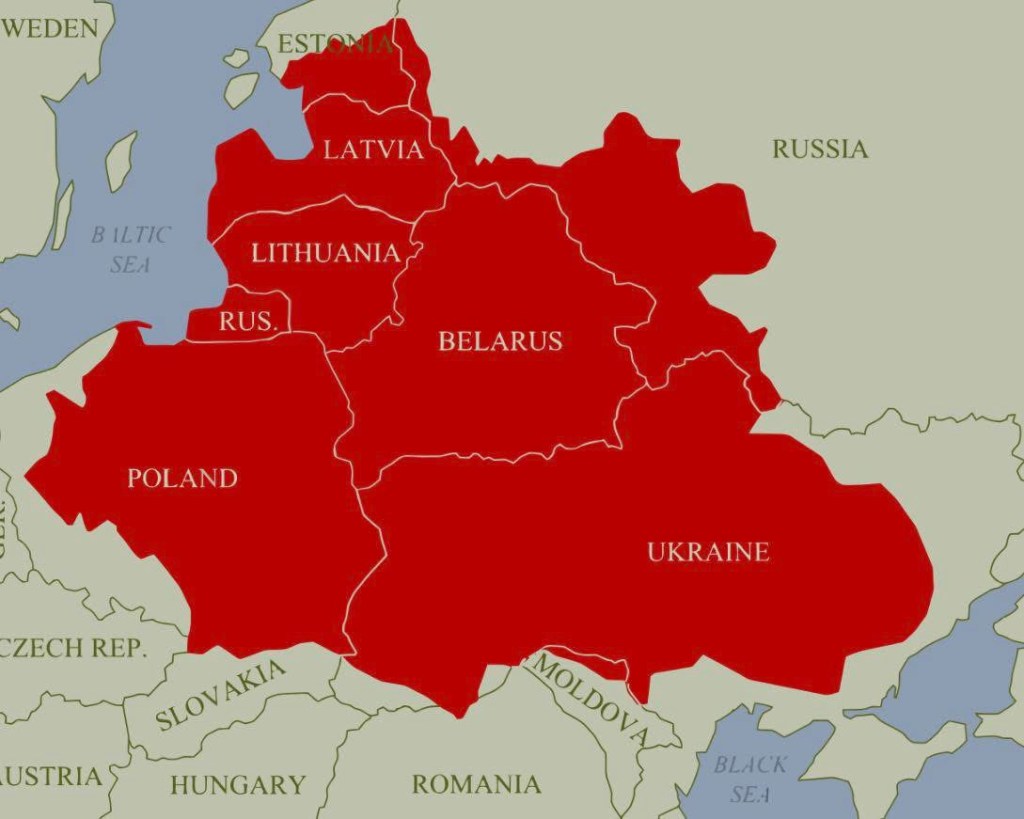
I grew up in Warsaw in the 1980s, the child of a Malaysian diplomat, and was taught Polish history by teachers who had lived through enough of it to find the past instructive rather than remote. One lesson in particular has remained with me. In the summer of 1606, the Polish nobility raised a formal confederation against their king and presented him with a list of demands that revealed, with unusual candour, the true nature of their grievance. Sigismund III Vasa had been elected by the szlachta, the sovereign noble class whose collective discretion was the constitutional foundation of the Polish throne, and he had governed since 1587 with an independence they found increasingly inconvenient. They wanted offices distributed to the right families. They wanted royal estates assigned to those who had delivered votes and expected returns. They wanted the king’s foreign policy subordinated to their factional interests, his appointments cleared through their networks, his favourites removed and replaced by men whose primary loyalty ran not to the crown but to the magnate houses that had made the crown possible. The demands were dressed, as such demands invariably are, in the language of constitutional principle. The confederation spoke of violated royal compacts and encroachments on noble liberty. The substance was simpler: they wanted a king who understood that his election had been an investment, and that investors expected a return.
Sigismund declined to provide one. His forces defeated the confederation at the Battle of Guzów in 1607. He remained king. But every Polish ruler who followed him governed in the knowledge that the Rokosz, the constitutional right of the noble class to rise in formal resistance against its own elected king, had been used, had nearly worked, and remained available to any sufficiently organised group of electors who concluded that their investment had not been honoured.
Elective systems carry this vulnerability in their constitutional architecture, not as a defect but as a consequence of their central premise. A body that holds the power to select a ruler holds, implicitly, the power to signal what it will select next. A ruler who understands his tenure as genuinely independent of that signal will, at some point, be reminded of it. The question that follows is whether he yields to the reminder or absorbs the cost of refusing it. The answer determines, more than any other single act of his reign, what kind of institution he leaves behind.
I did not expect to be applying this lesson to my own country. But what is being contested in Negeri Sembilan, the only state in Malaysia where the ruler is not born to the throne but chosen for it, is structurally the same question the Polish szlachta posed to Sigismund four centuries ago.
The tradition being contested in Seremban today took root in the fourteenth and fifteenth centuries, when Minangkabau settlers carried the Adat Perpatih across the Strait of Malacca to what would become Negeri Sembilan. Rooted in a theory of legitimacy that runs upward from the community through defined layers of customary recognition, it produced, by 1773, a formal elective monarchy whose constitutional logic is genuinely distinctive. At its apex sit the Undang Yang Empat, four territorial chiefs who hold the constitutional power to elect the Yang di-Pertuan Besar from among the eligible royal princes. Their discretion is real, their authority sovereign within its domain, and the ruler they choose holds his throne because they chose him.
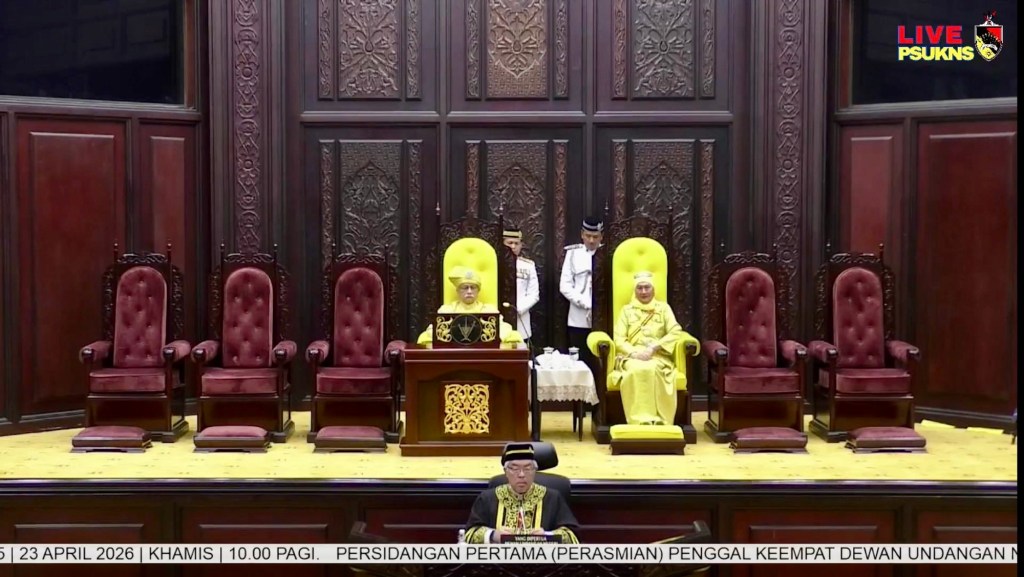
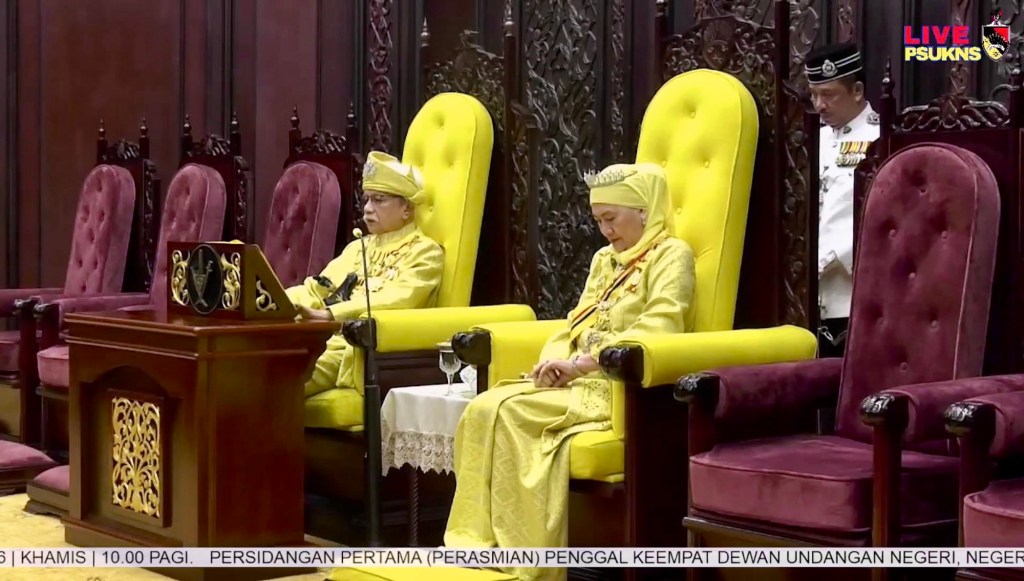
In 2008, following the death of the previous ruler Tuanku Ja’afar, the four Undang exercised that discretion and elected Tuanku Muhriz Tuanku Munawir. The outcome was not universally anticipated. The process was beyond question, because the standing of those who decided was beyond question. That clarity is precisely what the events of 2025 and 2026 have been designed to disturb.
The power to select a ruler carries within it an implied power that is never written into any constitution: the power to make known, before the formal moment of selection arrives, that discretion has a direction. A ruler who accommodates that signal governs by permission. The accommodation is rarely demanded openly. It accumulates, through smaller concessions, into a condition.
What preceded the public crisis of April 2026 was a period of pressure on the palace whose precise contours are not publicly documented but whose structural logic is legible in the sequence of events that followed. Tuanku Muhriz did not yield to whatever was being asked of him. The removal of Datuk Mubarak Dohak as Undang of Luak Sungai Ujong in May 2025, for 33 offences against custom and Islamic law, was the consequence of that refusal, not its cause. A formal sitting of the Dewan Keadilan dan Undang on 17 April 2026, presided over by Tuanku Muhriz, accepted the dismissal. Two days later, all four Undang signed a proclamation removing the Yang di-Pertuan Besar from his throne and naming Tunku Nadzaruddin Tuanku Ja’afar as his successor.
Tunku Nadzaruddin’s nomination was not a sincere succession act. It was a statement of preferred operating conditions dressed as a succession preference. He is the son of Tuanku Ja’afar, the very ruler under whose long reign the Undang’s expectations of the throne had been formed and confirmed. Naming him carried a message that required no elaboration: we know what a proper relationship between this throne and this council looks like, because we lived comfortably inside one for four decades, and we are naming the man most likely to restore it. Of the four princes eligible under the constitutional framework in 2026, three are from the Tuanku Ja’afar line and one is from the line of the reigning house. The arithmetic did not determine the choice. It completed the message. It was a shot fired across the bow of a ruler who had already declined to respond to signals of a quieter kind. Tuanku Muhriz did not respond to this one either.
The state government’s rejection of the proclamation has focused, correctly but narrowly, on Mubarak’s lack of standing: a man stripped of his office cannot exercise its powers. The three remaining Undang participated in the same proclamation. Their standing has not, as yet, been formally challenged, and their signatures satisfy a plain reading of Article 29 of the state constitution. That dimension has received less official attention than the constitutional arithmetic requires. The government won the immediate exchange. It has not closed the constitutional question, because the constitutional question is not its to close. It belongs to the institution itself, and to the ruler who has, through his refusal to capitulate, forced it into the open.
What Tuanku Muhriz has preserved, at the cost of a genuine constitutional crisis, is something that cannot be recovered once surrendered. An institution that demonstrates its throne is negotiable before the moment of selection will be negotiated with at every succession thereafter. The leverage does not diminish with use. It compounds. Each accommodation establishes a precedent that makes the next demand more credible and the next refusal more costly.
The Polish magnates understood this. The demands they brought to Sigismund were not the first, nor would they have been the last had he met them. Each concession would have produced a more detailed set of expectations at the next occasion, because the mechanism, once shown to work, attracts investment. Sigismund paid the price of the confrontation rather than the price of the concession, because he understood that the concession, unlike the confrontation, had no natural terminus.
The dispute in Negeri Sembilan sits within a federal constitutional order whose architecture does not require activation to be consequential. The Yang di-Pertuan Agong presides over a conference of rulers in which the integrity of state royal institutions is a matter of collective concern. The federal government retains instruments, up to and including emergency powers, that leave no ambiguity about where constitutional finality resides. This is not Poland. There is no Sejm to dissolve, no neighbouring power to fund a faction, no vacuum above the dispute into which armed resistance could plausibly expand. Putrajaya has thus far allowed the state government’s position to stand without federal elaboration, which is itself a form of judgment. What remains unresolved is not whether the federal framework is relevant. It plainly is. What remains unresolved is the prior constitutional question that no federal instrument can answer on the institution’s behalf: whether the selecting body that acts at the next succession will do so in conditions of genuine independence, or in conditions already shaped by what was attempted, and what was refused, in April 2026.
The noble rebellion of 1606 did not end the Polish elective monarchy. The confederation failed, the king survived, and the institution endured the confrontation. What it could not endure was the gradual conversion of its selecting body from a council of sovereign judgment into a market of managed outcomes. That conversion happened one accommodation at a time, as successive kings concluded that meeting the demands was less costly than refusing them. They were wrong. But the error revealed itself slowly, across reigns rather than within them, and by the time the pattern was visible it was too late to reverse. Poland was partitioned in 1795. The elective throne that had lasted 222 years did not fall to a foreign army. It was hollowed out, succession by succession, by the accumulated weight of concessions that each seemed reasonable in isolation and proved fatal in aggregate.
I am writing this as a Malaysian who has no stake in the succession of Negeri Sembilan and no ancestral connection to its customary arrangements. What I have is an education in what happens to elective institutions when the men who hold selection authority conclude that it can be converted into something else. That education was not acquired in any Malaysian classroom. It came from teachers in Warsaw who had watched their own country’s history long enough to know that the most dangerous demands are the ones dressed in constitutional language. And that the rulers who refuse them are rarely thanked in the moment, but are quietly vindicated across time.
A ruler who refuses to negotiate the conditions of his own succession
accepts a crisis in place of a precedent.
The crisis resolves.
The precedent, once set, does not.
That is what Tuanku Muhriz understood when he declined to yield.
And it is what the institution will remember
long after this particular confrontation has run its course.
Datuk Omar Mustapha is Chairman of Room Capital and founder of The Coherence Practice, an advisory firm working at the intersection of capital, institutions and statecraft. He has served on the boards of PETRONAS and AirAsia and was Chair of the PETRONAS Leadership Centre. The views expressed are his own.
This essay was written on 21 April 2026.

