-
Stronger Together: South Africa leads the charge!
-
Why Do They Hate Us So Much?

How is it that one of the most intelligent and gifted people on God’s earth protected by one of the most sophisticated and modern armies on earth, could play victim so successfully for so long?
At the end of the World War II, the Marshall Plan in 1948 was a American led economic rehabilitation effort to rebuild Western Europe, but without a significant part of the Jewish population and their mercantile class remaining in European society.
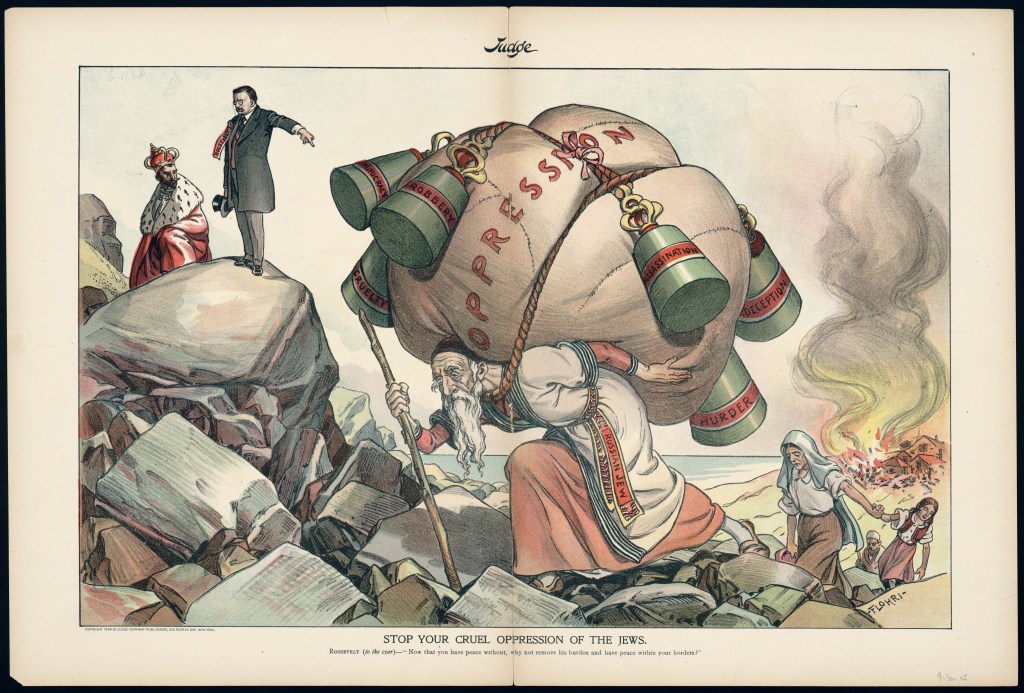
Stop Your Cruel Oppression Of The Jews, said Roosevelt to the Czar (1908). The Jews could have returned to their homes and rebuilt their businesses, but that was not in the interest of the non-Jewish European elites. (Why give back when you don’t have to?). The mass emigration of the Jewish populace out of Europe began with the rise of Nazism and was completed by the Allied Powers.
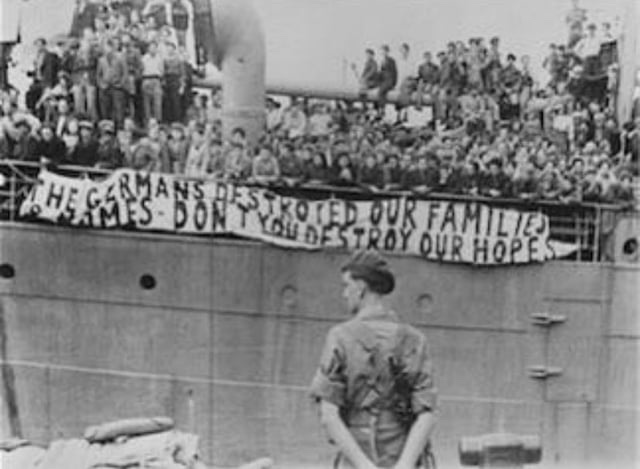
A refugee ship caught by the British. Their banner reads: The Germans destroyed our families – don’t destroy our hopes.” It is estimated that 70,000 Jews arrived in Palestine prior to 1948 under the Aliyah Bet (illegal immigration) program. Another 50,000 were rounded up by the British and placed in detention camps. Germany, a defeated Axis power, has been paying reparations for 70 years for this collective benefit of resettlement of Jews out of Europe, even until today. Total to date: €80bn. Announced for 2024: €1.4bn. Imagine milking a cow dry.
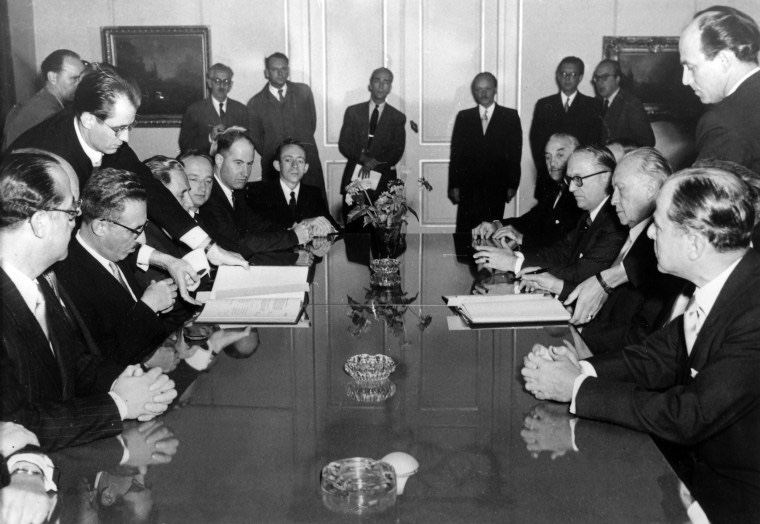
Representatives from Germany and Israel meet in Luxembourg to sign an agreement to provide compensation for Jews who suffered under Nazi Germany on Sept. 10, 1952. Switzerland, a neutral power, has been paying reparations for Jewish monies seized in their banks (estimated at $6bn during WWII). Imagine choking a golden goose.
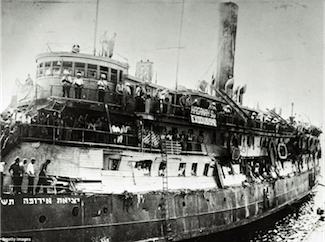
The crowded illegal immigration ship Exodus, carrying Jewish refugees from war-torn Europe enters Haifa port on July 18, 1947 after three hours of combat with the British navy. A gaping whole is clearly visible in the ship’s side. An eyewitness wrote: “The ship looked like a matchbox that had been splintered by a nutcracker. In the torn, square hole, as big as an open blitzed barn, we could see a muddle of beddings, possessions, plumbing, broken pipes, overflowing toilets, half-naked men, women looking for children; railings were ripped off; the lifesaving rafts were dangling at crazy angles.” The plight of the ship created sympathy for the Jews. The United States, had an even bigger plan for the Jewish people (many X bigger than the $13bn Marshall Plan), underwriting the creation of a new country in a land outside of Europe or America – a land that was not theirs to give. Israel’s continued existence supports the American Military-Industrial complex as acknowledged by the sitting 🇺🇸 President. Israel is America’s single largest aid recipient, total aid 1946-2022: $244bn. Imagine a wily mistress and her rich benefactor.
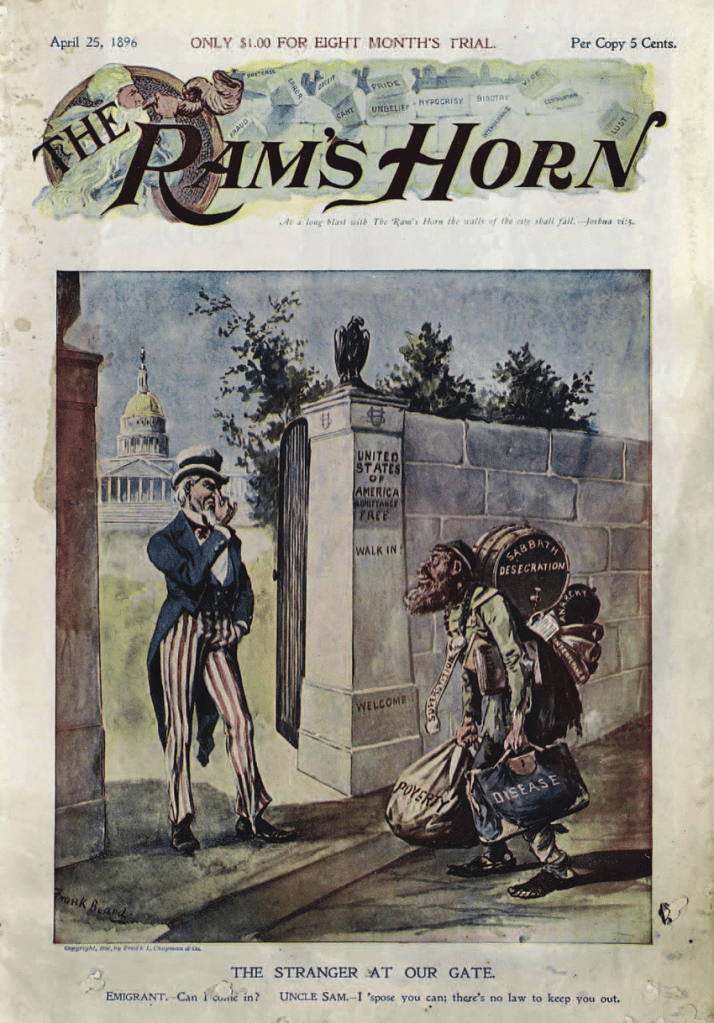
The Stranger At Our Gate [“It’s about time we stop apologising for our support for Israel,” Biden told lawmakers in June 1986. “It is the best $3bn investment we make. If there weren’t an Israel, the United States of America would have to invent an Israel to protect her interests in the region.”]
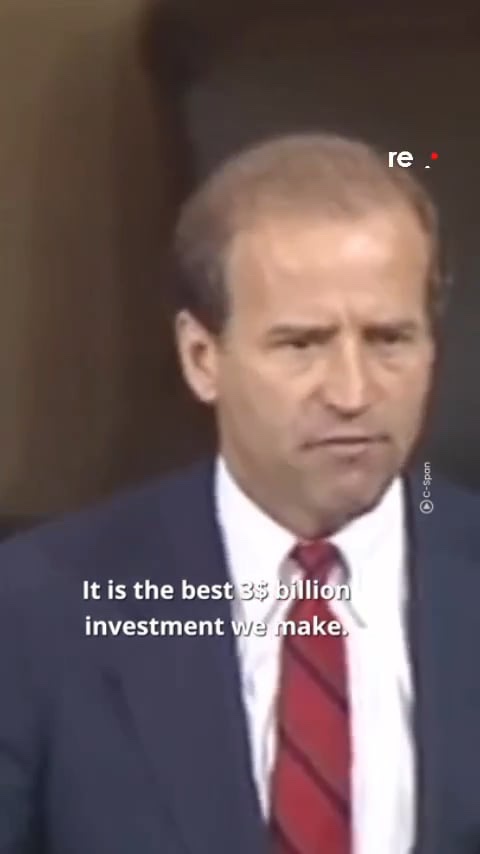
Senator Joe Biden speaking on the floor of the US Senate (1986) In the end, Israel is a tragic but ultimately racist project that has served the purpose and interests of the political and business elites of Europe and America. The apartheid state that has emerged since 1948 is one they are equally responsible for. This is why is it impossible for the collective Western elites to abandon it.
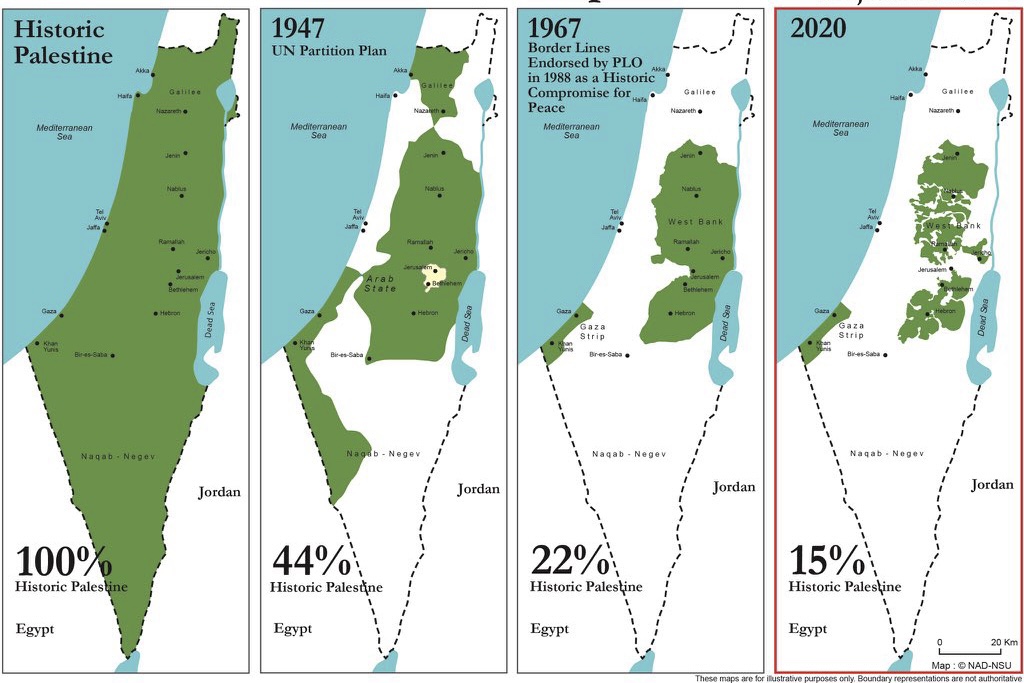
Europe & America’s gift to the Jewish people that just keeps giving. But today, it is ordinary people in those same countries who are waking up to the fact that they have been fed an insidious, self-serving lie by successive leaders who rule in their name.

London 
Paris 
Rome 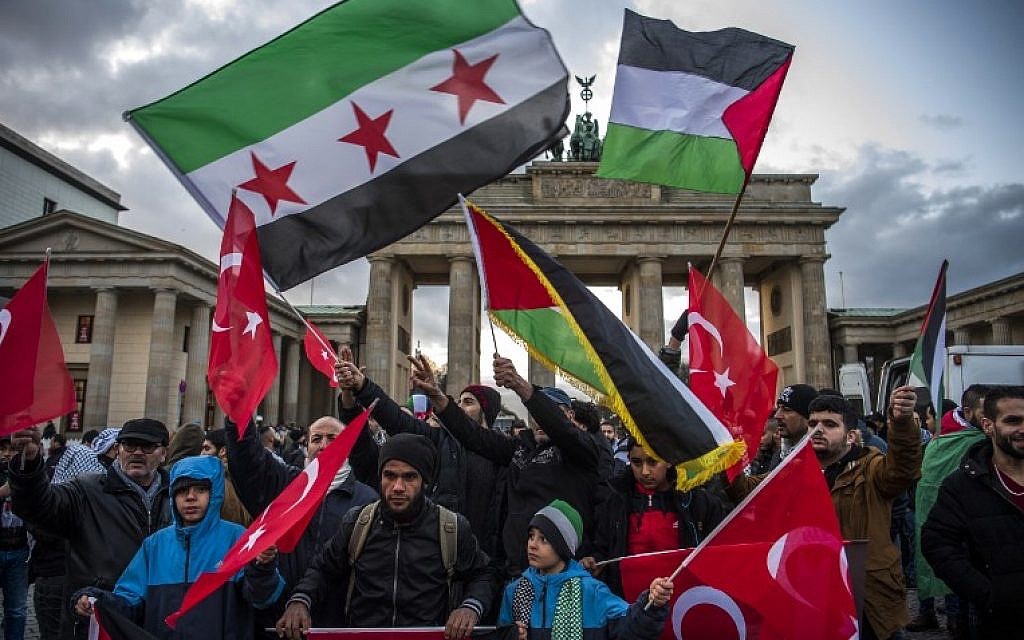
Berlin 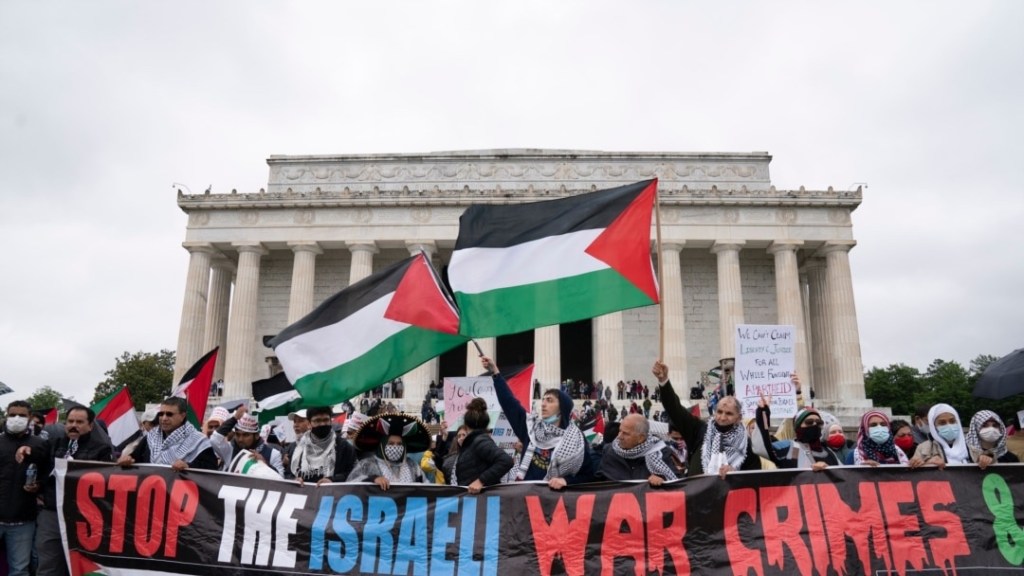
Washington D.C. 
New York 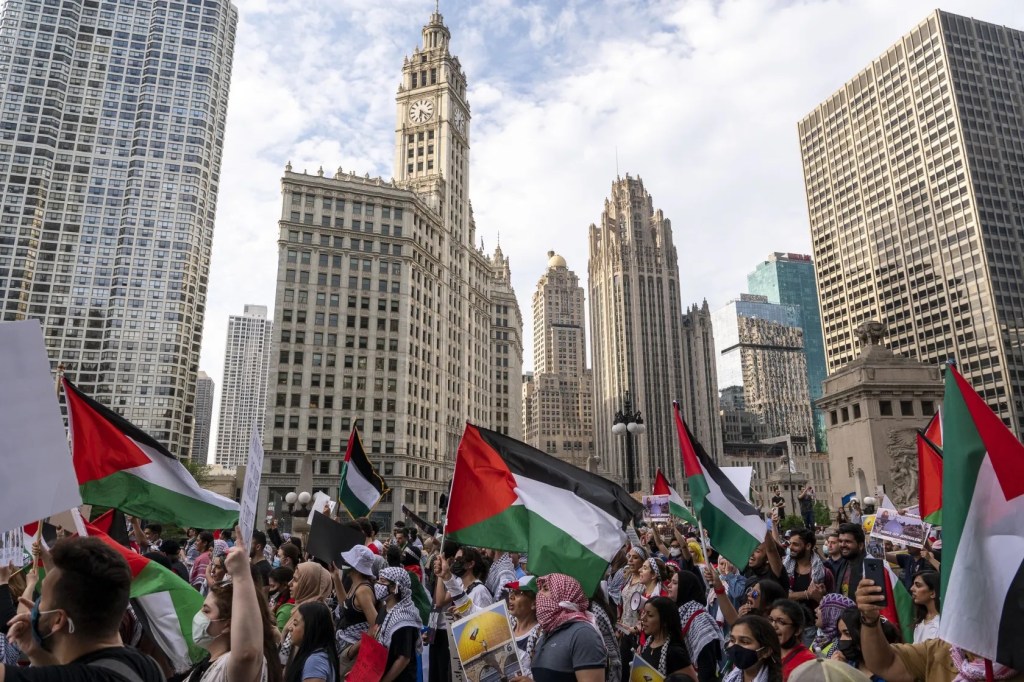
Chicago Finally, the elegant masks have fallen and the true faces of deceit and deception are being revealed. The time of reckoning has come.
-
Blistered hands
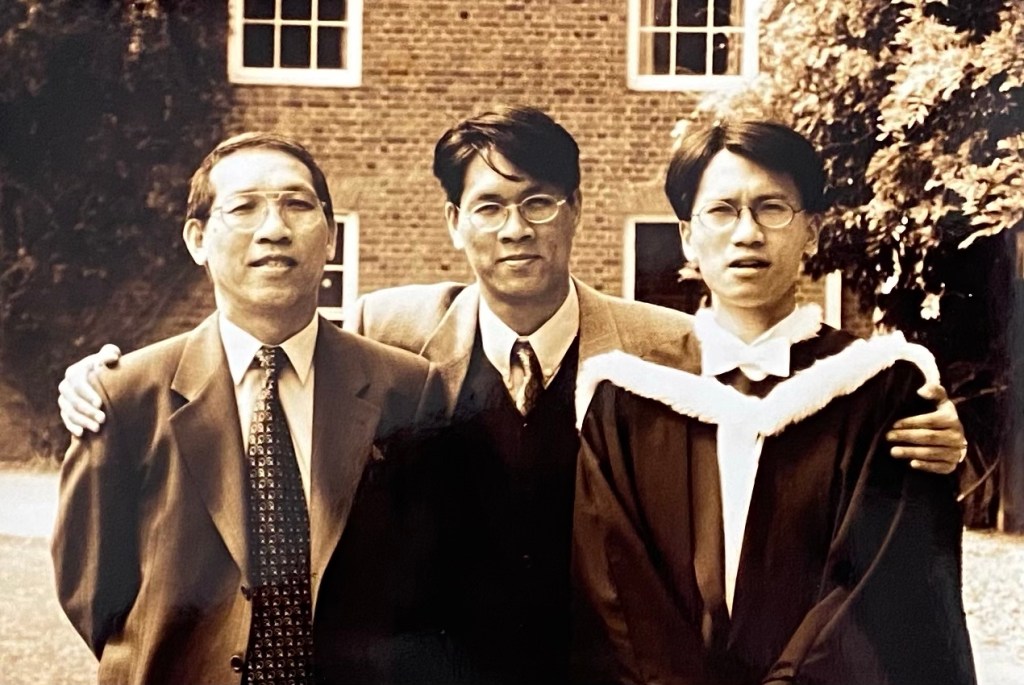
I started working life in 1994 almost three decades ago.
The first decade built the early foundations for discipline, structure and process. Interspersed were opportunities for personal growth and experimentation, a young seafarer travelling far and wide in search of new lands and fool’s gold.
The second decade launched a great expedition into the uncharted waters of entrepreneurial risk-taking, firm-building at the one end and corporate governance, leadership development at the other. Clear skies and full wind in our sails. A captain of my own destiny.
The third decade was a treacherous passage around Tierra del Fuego. While work evolved into building a legacy of quiet purpose, fortifying family and serving community, the tempest of wind, rain and thunder raged outside the portholes. But a smooth sea never made a skilled sailor.
So here we are. Blistered hands. Ocean air and salty hair. Alive, standing and smiling. Ready for the next adventure.

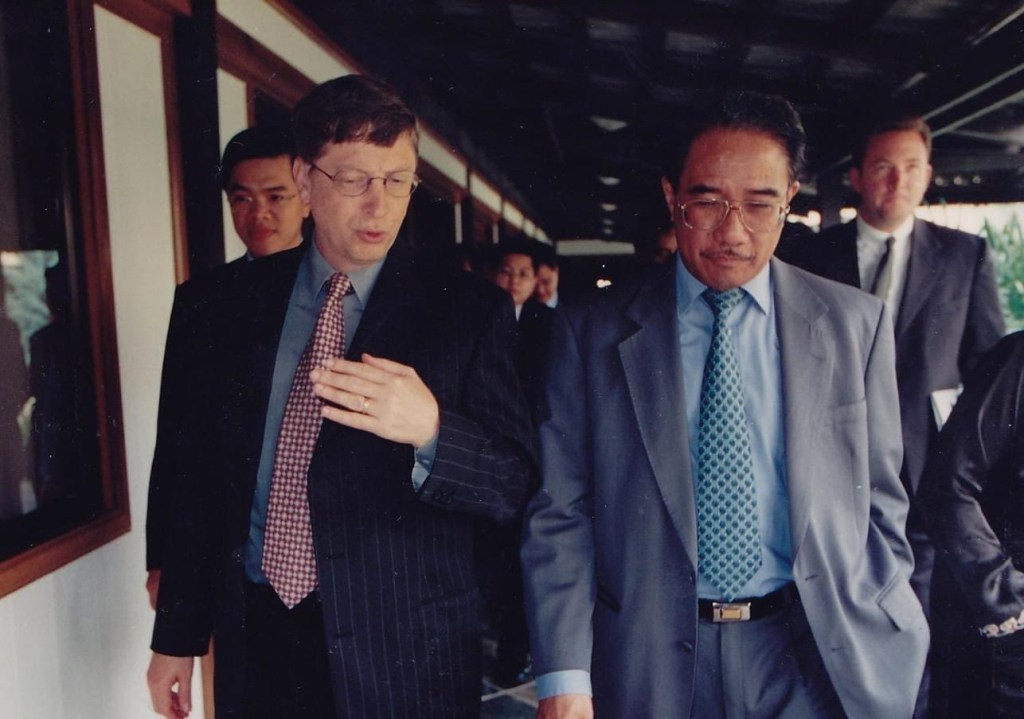
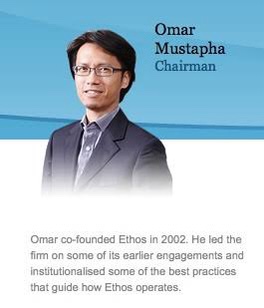
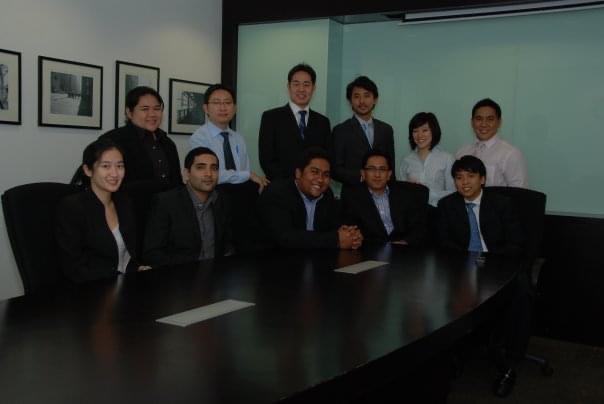


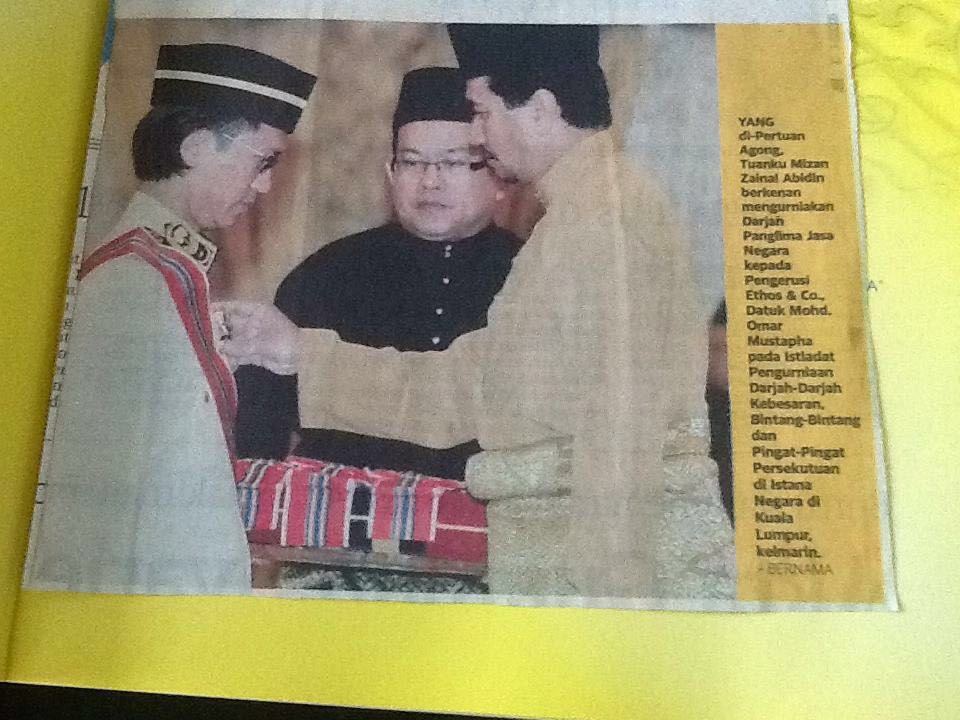
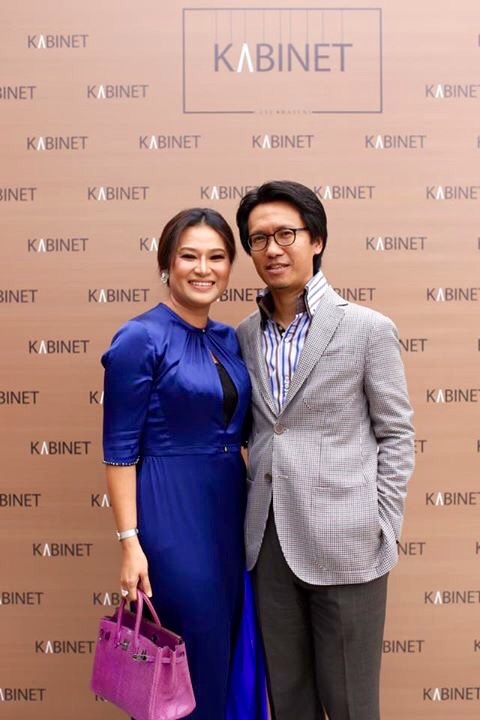
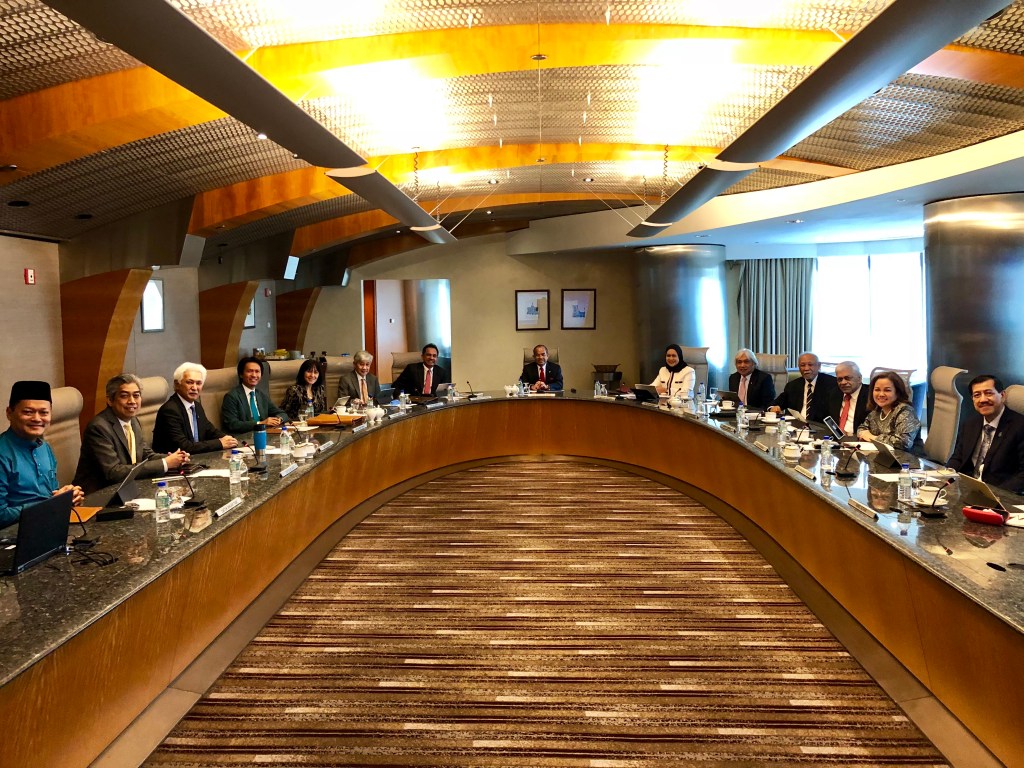

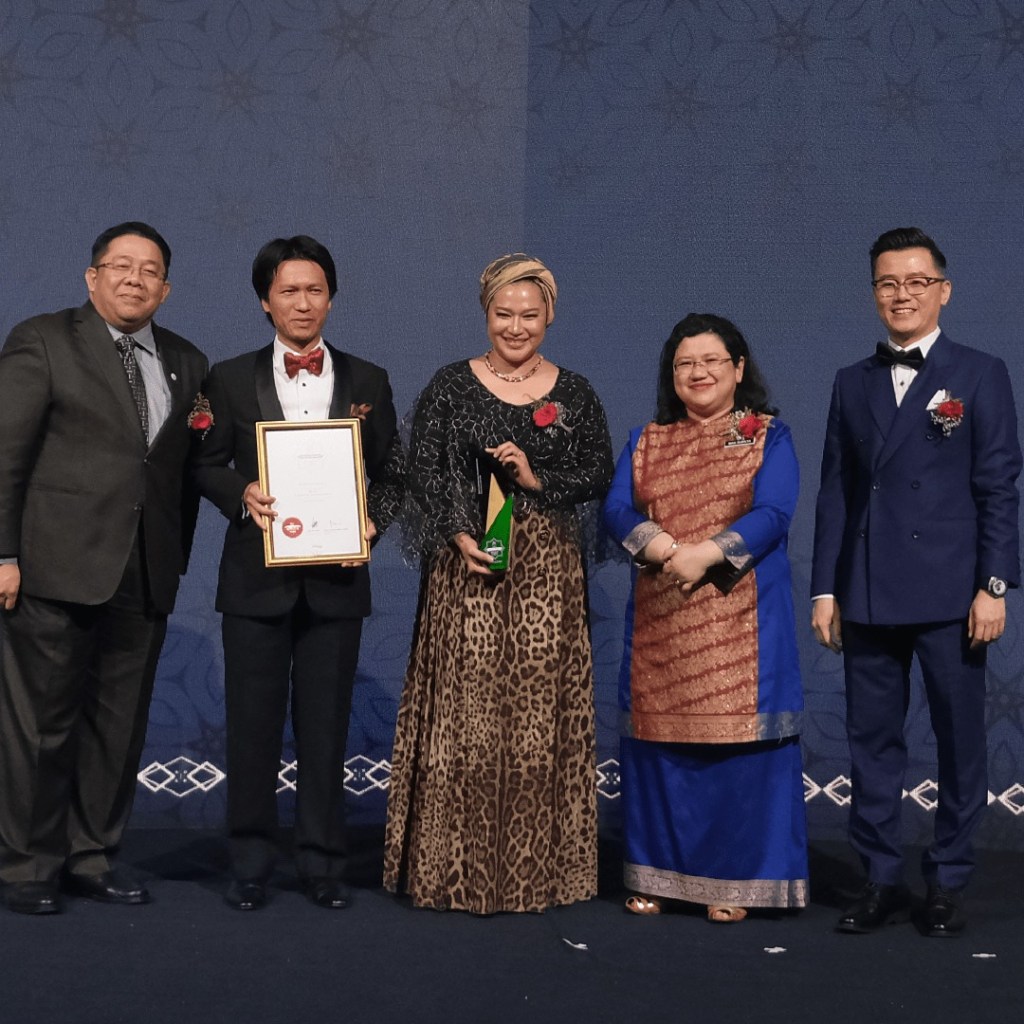
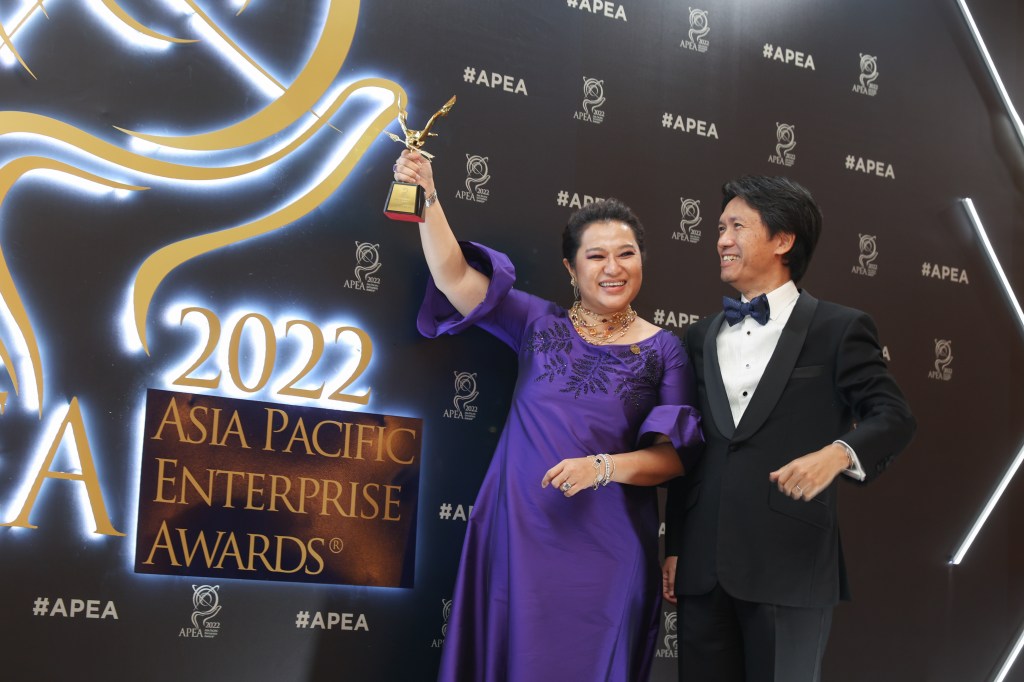

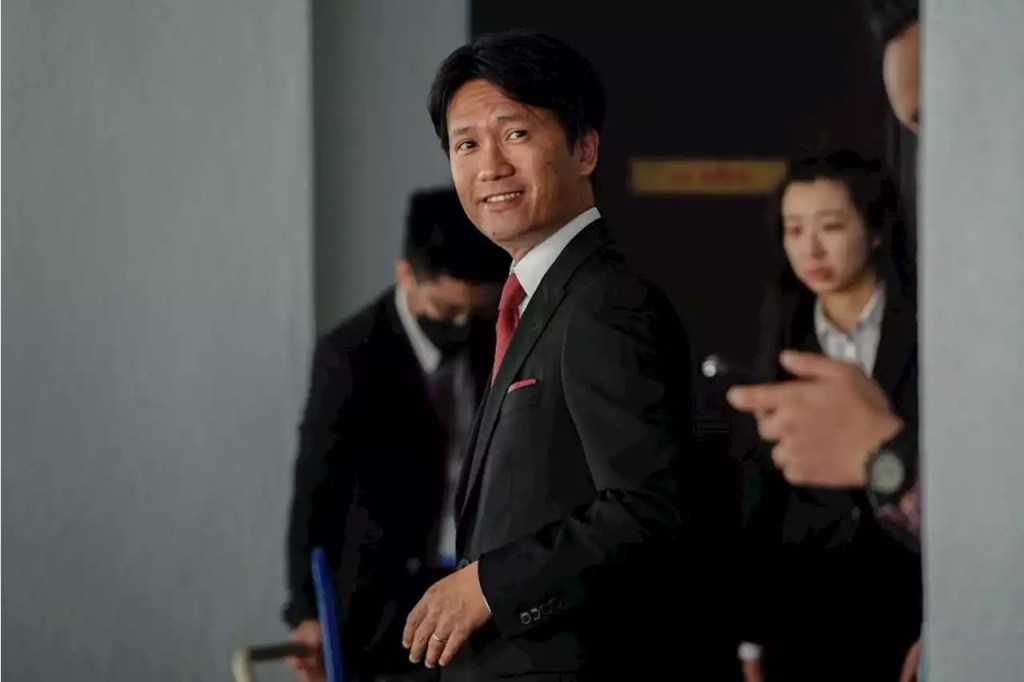
-
Farewell Uncle G
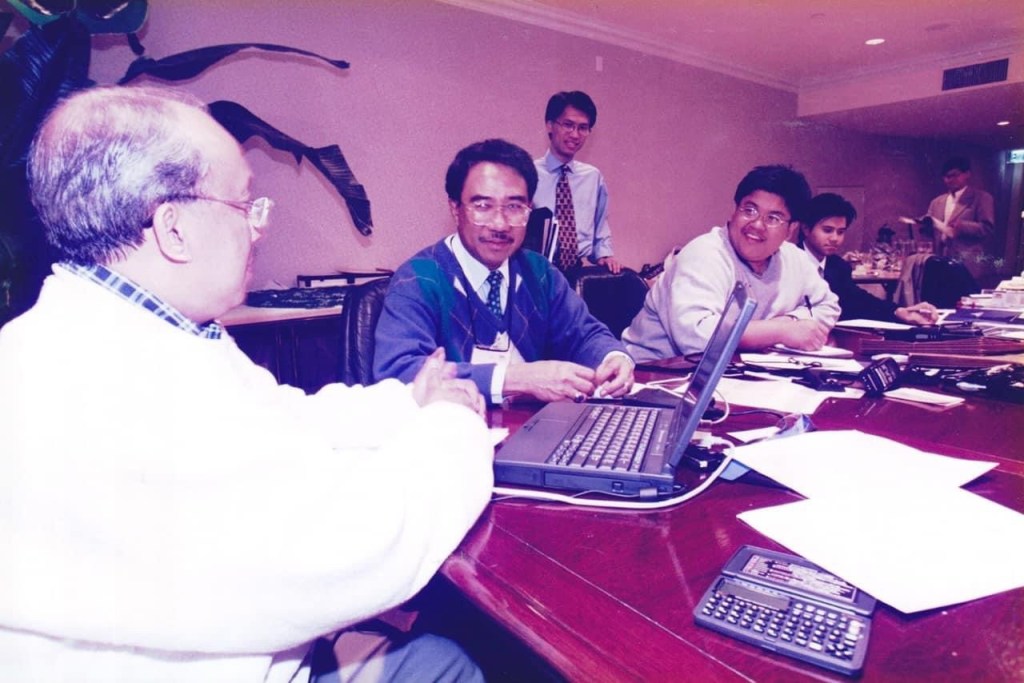
Today we bear witness to the passing of a towering Malaysian: Tan Sri G Gnanalingam.
In an era when ports were owned by the state (and thus lagged in efficiency and enterprise), he was the first to successfully propose and secure from the government a concession to build and operate a new modern multicargo port in Port Klang to serve a rapidly growing and industrialising Malaysia. Today Westports is a leading port operator handling 80% of all container traffic at Port Klang making the latter the 12th busiest port in the world. His business achievements and successes are self evident.
He was also someone of much curiosity and quiet intellect. He served successive Prime Ministers formally on various committees and his counsel was often sought and welcomed informally. He was a Malaysian first and foremost and he loved his country dearly.
Uncle G, you will be missed. I will forever remember you as the man who bought me my first 10 speed bicycle 🚲 in 1989 after you found out about my SPM high school
exam results. The bike I used to cycle from my house in Damansara Utama to work at 7-Eleven in Taman Tun Dr Ismail.I will always recall that time I dropped by your office at Plaza Damansara, to tell you about my university offer, and how happy you were for me. As we sat down on the sofa for tea, you gestured excitedly. “Omar I want to show you my next project. I saw the PM and he just approved my idea to build this.”
You flipped open a presentation document, A3 sized, full of impressive numbers and architectural renderings: it was your vision for Westports. I was in awe.
“Omar, if you dream big enough, and work hard enough, nothing is impossible in this blessed country of ours. Always remember that.” I have never forgotten those words, Uncle G.
Thank you and farewell. May your legacy live on in the able hands of those with whom you have entrusted.

-
Nikmat Bersifat Tumpang Tindih Seorang Penulis Politik 🖋️
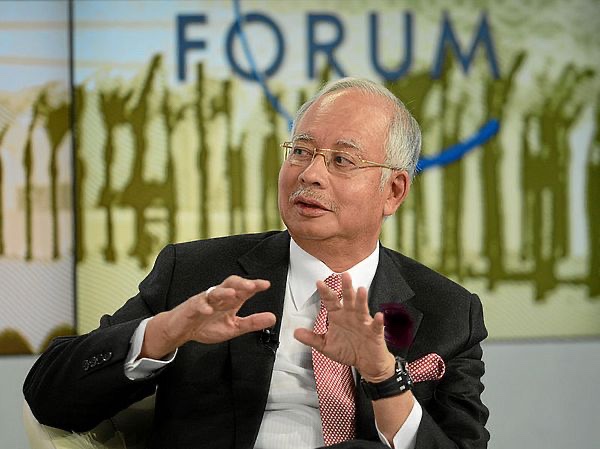
Penulisan ucapan politik adalah suatu kraf di mana seorang penulis yang berbakat sederhana cuba mengatur aliran pemikiran, idea, dan hujah seorang pemimpin; merajutnya menjadi perkataan dan ayat yang pada akhirnya menyampaikan tujuan, makna, dan emosi kepada hadirin yang peka.
Ben Rhoades, penulis ucapan terdekat Presiden Barack Obama yang pernah bertugas sebagai Pembantu Khas kepada Presiden dan Timbalan Penasihat Agensi Keselamatan Kebangsaan (NSA) pernah berkata seperti ini:
“Jika anda seorang penulis ucapan, anda harus tahu apa yang dipikirkan oleh orang yang anda tulis untuknya. Ramai penasihat dasar luar negara sedang berfikir: bagaimana saya boleh memasukkan cadangan saya ke dalam ucapan lelaki ini? Saya hanya sedang berfikir: apa yang diingininya untuk dikatakan?”
Kata-kata Ben benar-benar tepat. Dato’ Sri Najib Razak sentiasa tahu apa yang beliau ingin katakan. Peranan saya hanyalah untuk mencari cara terbaik bagaimana beliau harus menyatakannya.
Saya bangga pernah berkhidmat kepada Najib sebagai penulis utama ucapan Bahasa Inggeris dan Pembantu Khas kepada Timbalan Perdana Menteri dari 2004 hingga 2006. Kami bersama-sama bersusah payah menyediakan banyak ucapan, sepanjang tahun-tahun sejak saya diperkenalkan kepadanya pada penghujung 1990-an. Di bawah ini adalah salah satunya. Dalam konteks masa kini mengenai peperangan Rusia berterusan di Ukraine dan ancaman nyata konflik ketenteraan di Taiwan, adalah berharga untuk mengingatkan kembali peringatan Najib Razak tentang nilai keamanan 18 tahun yang lalu.
Forum Keamanan Global Pusat Dagangan Dunia Putra Kuala Lumpur 17 Disember 2005
[Ucapan oleh YAB Dato Sri Najib Tun Razak, Timbalan Perdana Menteri Malaysia]
YABhg Tun Dr. Mahathir bin Mohamad
Presiden Kehormat, Yayasan Kepimpinan Perdana
YABhg. Tun Dr Siti Hasmah Mohamad Ali
Kesohor Kehormat
Para Tetamu Yang Mulia
Tuan-tuan dan puan-puan para hadirin sekalian
1. Saya ingin memulakan dengan mengucapkan terima kasih kepada YABhg. Tun Dr Mahathir dan Yayasan Kepimpinan Perdana kerana menjemput saya untuk menyimpulkan forum ini. Saya tidak hanya sangat gembira berada di sini, tetapi juga berasa sangat berhormat kerana dapat menyertai perhimpunan individu yang cemerlang ini, untuk mempertahankan dan memberikan suara kepada cita-cita manusia yang paling agung dan sukar dicapai: keinginan untuk keamanan.
Tuan-tuan dan puan-puan sekalian
2. Persidangan untuk Perdamaian 1899 adalah himpunan antarabangsa utama pertama dalam sejarah yang didedikasikan sepenuhnya kepada perdamaian sebagai matlamat yang diingini. Seolah-olah untuk menguji keseriusan niat kita, kita justru menjadi saksi kepada salah satu tempoh yang paling ganas dalam sejarah manusia. Dua Perang Dunia, Perang Vietnam, Perang Korea, Perang Kamboja, dan banyak konflik lain di mana kerajaan berperang melawan rakyatnya sendiri. Di mana suku berperang melawan suku. Satu bangsa melawan bangsa lain. Orang dengan agama tertentu melawan penganut agama lain. Lebih dari seratus tahun kemudian, kita berkumpul di sini di Kuala Lumpur untuk sekali lagi mencari perdamaian yang masih sukar dicapai oleh majoriti besar umat manusia.
3. Selepas Perang Dunia Kedua, Pertubuhan Bangsa-Bangsa Bersatu, terutamanya Majlis Keselamatan, dipercayakan dengan tugas mencegah perang dan membina perdamaian. Kami menaruh harapan besar pada multilateralisme. Kami percaya bahawa pendapat dunia yang kuat akan membujuk mereka yang berniat untuk keganasan dan agresi. Kami percaya bahawa walaupun Majlis Keselamatan mungkin tidak adil dalam struktur pembentukannya, ia sekurang-kurangnya dapat menjamin bahawa negara-negara yang paling kuat di dunia akan berkumpul dan bertindak sebagai pengekalan dan imbang terhadap kemungkinan perang. Mengikut rekod prestasi selama 50 tahun terakhir, kesimpulan kami hanya boleh menjadi bahawa pendekatan multilateral ini hanya berjaya sebahagian sahaja. Kami boleh meminimumkan konflik antara negara kecil. Kami boleh mengawal tindakan agresif beberapa negara besar. Tetapi kami tidak berdaya apabila berhadapan dengan negara-negara yang sangat kuat atau mempunyai sahabat yang amat berpengaruh.
4. Apabila abad ke-20 hampir berakhir, kita dapati bahawa dunia masih merupakan tempat yang berbahaya. Palestin. Kashmir. Afghanistan. Congo. Rwanda. Somalia. Kuwait. Kosovo. Iraq. Negara-negara ini terpahat dalam kesedaran kolektif umat manusia kita: bukti kegagalan kita dalam mencegah gelombang keganasan dan penderitaan manusia yang berterusan. Walaupun usaha ikhlas masyarakat global, abad ke-20 berakhir tanpa lebih baik daripada permulaannya: sebagai noda merah yang luas dalam sejarah manusia.
5. Dalam gambaran suram ini, bagaimana kita harus menterjemahkan keinginan mendalam dan asas untuk penyelesaian yang damai terhadap perbezaan kita? Adakah terdapat peta jalan untuk perdamaian? Kita harus percaya bahawa masih ada harapan. Terdapat banyak cara praktikal di mana rakyat dan kerajaan di seluruh dunia yang mencintai perdamaian dapat bertindak untuk mempromosikan budaya perdamaian. Tetapi saya teguh berkeyakinan bahawa kita juga harus menyerang asas teori mereka yang mempromosikan perang sebagai cara untuk mencapai perdamaian. Kita harus melindungi landasan moral yang tinggi untuk perdamaian yang mereka cuba klaim bagi perang.
6. Dunia tidak akan pernah memiliki perdamaian yang berkekalan selama manusia masih mengagungkan sifat-sifat manusia yang terbaik untuk perang. Perdamaian, sama seperti perang, memerlukan idealisme, pengorbanan diri, dan kepercayaan yang lurus dan teguh.
Para hadirin yang dihormati,
7. Sebagai titik permulaan, kita harus membatalkan penggunaan kekuatan oleh satu negara terhadap negara lain. Biarlah saya jelaskan bahawa saya tidak mengesyorkan kita untuk menyerah hak bersenjata. Kerajaan mempunyai tanggungjawab untuk membina kemampuan pertahanan yang kukuh. Setiap negara mempunyai hak untuk membela diri, untuk melindungi kehidupan, kebebasan, dan harta benda di dalam sempadan sendiri. Tetapi dalam ketiadaan sebuah kerajaan dunia atau keinginan untuk menyerahkan hak kepada kumpulan serantau, kedaulatan negara harus dianggap suci dan menjadi asas tindakan antarabangsa. Tiada negara, tidak kira betapa tinggi pemikirannya tentang kedudukan moralnya, tidak kira betapa sah pun perjuangannya, tidak kira betapa yakinnya kemampuan militernya, boleh memulakan perang ke atas negara lain sebagai cara untuk melindungi kepentingan dirinya sendiri atau dunia.
8. Forum ini dengan tepatnya telah menyeru kepada gerakan global yang teratur untuk menggalakkan rakyat biasa untuk memilih perdamaian dan menolak perang. Sebagai pemimpin kerajaan di seluruh dunia, kita harus duduk tegak, mendengar dengan teliti, dan mengambil perhatian. Dalam sejarah, kita tahu bahawa keputusan untuk pergi berperang diambil oleh individu yang berkuasa atau kumpulan individu yang berkuasa yang bertindak bersama. Sepanjang zaman, perang telah dilancarkan oleh kerajaan monarki dinasti, diktator kejam, junta tentera, dan juga Perdana Menteri dan Presiden yang terpilih secara bebas.
9. Walau bagaimanapun, dalam semua keadaan ini, tidak ada undian, tidak ada referendum, tidak ada cara untuk bertanya kepada komponen yang paling jelas soalan yang paling jelas: warga, adakah anda mahu kami pergi berperang? Rakyat biasa di mana-mana tempat tidak diberikan hak untuk memutuskan sama ada untuk mengorbankan nyawa anak muda terbaik mereka dan mengambil nyawa orang lain di tempat yang jauh.
10. Adalah terlalu naif untuk mengharapkan diktator untuk berunding dengan warga mengenai pergi berperang, tetapi tidakkah kita boleh mengharapkan ini daripada negara demokrasi? Jika orang di dunia bebas mempunyai masa untuk memilih idola nasional mereka berdasarkan kualiti nyanyian mereka, jika mereka boleh memutuskan sama ada atau tidak mahu mengenakan hukuman mati ke atas penjenayah warganegara mereka, mengapa mereka tidak boleh diberikan pilihan moral untuk memutuskan sama ada untuk menyebabkan kematian pasti ke atas orang-orang tak berdosa di luar negara mereka? Mungkin sudah tiba masanya untuk membenarkan pengundi yang bijak, di negara-negara demokrasi, menggunakan hak veto mereka setiap kali kerajaan mereka memutuskan untuk pergi berperang di luar sempadan mereka sendiri. Kita tentu mempunyai teknologi dan keupayaan untuk melakukannya dengan cekap pada hari ini. “Veto Perang” harus menjadi seruan yang manusia bawa ke setiap kampung, setiap komuniti, setiap bandar, setiap kerajaan di seluruh dunia.
Para hadirin yang saya hormati,
11. Keutamaan seterusnya yang perlu kita ambil ialah menerima pendekatan yang lebih menyeluruh dan seimbang dalam usaha bersama kita untuk mencapai kebebasan. Kebebasan pada hari ini telah menjadi terlalu sempit dalam takrifannya – malangnya, kita telah mengembangkan pandangan yang terpotong mengenai kualiti mulia ini. Pada akhir Perang Dunia Kedua, Presiden Roosevelt berbicara dengan indah mengenai empat kebebasan penting yang akan menjamin keamanan. Biar saya mengutip kata-katanya kerana kata-katanya tetap relevan pada hari ini: “Yang pertama adalah kebebasan bersuara dan berekspresi – di mana-mana di dunia. Yang kedua adalah kebebasan setiap individu untuk beribadah kepada Tuhan dengan cara sendiri – di mana-mana di dunia. Yang ketiga adalah kebebasan daripada kekurangan – yang bermakna menjamin kehidupan yang sihat dalam keadaan damai bagi setiap negara – di mana-mana di dunia. Yang keempat adalah kebebasan daripada rasa takut, yang bermakna pengurangan senjata di seluruh dunia sehingga tidak ada negara yang berada dalam kedudukan untuk melakukan tindakan agresif fizikal terhadap mana-mana jiran – di mana-mana di dunia.”
12. Roosevelt adalah betul. Kebebasan bukan hanya tentang demokrasi. Ia juga tentang toleransi beragama dan saling menghormati. Ia melibatkan membanteras kemiskinan dan memastikan kemakmuran. Ia melibatkan kita secara kolektif meninggalkan peperangan dan “alat-alat peperangan” sebagai instrumen yang sah dalam dasar luar negara. Bukan hanya di dalam bayang-bayang negara-negara Dunia Ketiga, tetapi juga di kalangan Dunia Pertama yang berpengetahuan luas.
13. Pengalaman Malaysia telah mengajar kita hikmah bahawa setiap negara harus diberikan hak yang tidak dapat dipertikaikan untuk mengejar kebebasan ini mengikut urutan dan kelajuan yang sesuai dengan sejarah dan keadaan khusus mereka. Keinginan untuk perdamaian jauh lebih tangguh dan universal daripada yang kita sangka. Sejarah menunjukkan kita tidak perlu menggunakan kekuatan perang untuk memberi ekspresi sepenuhnya kepada keinginan tersebut. Biar saya ulangi ini: Kita tidak perlu menggunakan kekuatan perang untuk memberi ekspresi sepenuhnya kepada kebebasan.
14. Pada suatu masa dulu, kita memahami hal ini. Rancangan Marshal untuk Eropah selepas Perang Dunia Kedua membina asas kemakmuran yang akan menjadi benteng menentang kezaliman dan penindasan. Kuasa-Kuasa Bersekutu memainkan peranan penting dan disambut baik dalam pemulihan Eropah. Peace Corps membawa warga Amerika keluar dari zon selesa mereka, melihat bagaimana separuh lain dari umat manusia hidup – sumbangan mereka dalam pendidikan, pengurangan kemiskinan, pengenalan kemahiran baru – masih memberi kesan hingga hari ini sebagai bukti kebaikan yang pernah ditunjukkan oleh rakyat Amerika Syarikat. Inilah pendekatan kuasa lembut yang dunia sambut baik, dan satu yang harus kita kembalikan.
15. Jika benar bahawa negara-negara demokratik secara umumnya tidak berperang antara satu sama lain, kita harus bertanya mengapa kita kelihatan kurang berat sebelah untuk berperang dengan negara-negara yang tidak demokratik. Kepada mereka yang menunjukkan kemajuan yang dicapai di Iraq dan Afghanistan, biar saya mengingatkan anda juga tentang kemajuan yang kita capai di bekas Kesatuan Soviet, di Jerman yang bersatu semula, di Republik Czech pasca-Revolusi Beludru, di Afrika Selatan pasca-Apartheid, di Indonesia baru-baru ini. Margaret Thatcher yang menarik perhatian kita kepada hakikat bahawa Ronald Reagan memenangi Perang Dingin tanpa menembak sebutir peluru pun. Bukan perang tetapi semangat manusia yang bertindak sebagai pembantu kelahiran demokrasi di negara-negara ini.
16. Pengalaman Malaysia sendiri dalam misi penjagaan perdamaian PBB dan dalam kerja bantuan kemanusiaan oleh angkatan tentera dan NGO kita, telah menunjukkan kepada kita bahawa nilai-nilai kebebasan tidak perlu diperjuangkan melalui laras senapang. Sekop yang sederhana, stetoskop, penapis air, belas kasihan manusia adalah alat-alat yang tidak kurang kuatnya untuk kebebasan dan untuk perdamaian.
Para hadirin yang saya hormati,
17. Usaha ketiga kita tidak ditujukan kepada kerajaan, tetapi di kalangan rakyat biasa. Kepada mereka di lapangan, kita harus meyakinkan diri kita untuk mengakui bahawa ancaman yang paling langsung, sebenar, dan tidak mengenal diskriminasi terhadap perdamaian pada hari ini – wabak keganasan – tidak dapat diselesaikan dengan kekuatan semata-mata. Pencetus terorisme antarabangsa tidak mengendalikan kerajaan, tidak menguasai wilayah, tidak memerintah tentera. Kita berperang dengan musuh yang tidak kelihatan; ancaman bayangan yang penuh dendam yang tidak berbentuk dan tidak berbentuk. Bala tentera mereka adalah minda yang dikuasai oleh orang biasa.
18. Tetapi marilah kita diingatkan. Jika kita memilih untuk membom teror untuk menyerah, kita akan gagal. Jika kita memilih untuk menghina mereka agar melihat kesalahan jalan mereka, kita akan gagal. Jika kita memilih untuk merespons kebencian mereka dengan kebencian kita sendiri, kita akan gagal. Jika kita memilih untuk menjadi buta terhadap keluhan yang sah di balik tindakan mereka yang tidak sah, kita pasti akan gagal. Saya teringat pepatah, “jika satu-satunya yang ada dalam tangan ialah palu, segala sesuatu akan terlihat seperti paku”.
19. “Benar, perdamaian yang abadi tidak dapat dijamin melalui kekuatan senjata semata-mata. Di antara rakyat merdeka, pertukaran terbuka ide-ide pada akhirnya adalah keamanan terbesar kita”. Itulah kata-kata seorang Presiden Amerika (Reagan). Saya ingin menambahkan bahwa bukan hanya di antara rakyat merdeka kita harus saling bertukar ide. Tetapi juga di antara mereka yang tidak bebas, yang terlantar, yang miskin, yang buta huruf, di seluruh dunia, dengan siapa kita harus terlibat dalam dialog jujur, memberikan konsesi, dan bahkan setuju untuk tidak setuju.
20. Kita harus berusaha membangun rasa saling menghormati antara sesama manusia. Ada sebuah ayat dalam Al-Quran yang mengajak laki-laki dan perempuan untuk saling mengenal, karena itulah tujuan Tuhan menciptakan kita dengan kepercayaan dan warna kulit yang berbeda.
21. Sejarah memungkinkan kita untuk menyatakan dengan pasti bahwa masa depan kita harus didasarkan pada budaya perdamaian dan dialog antara peradaban. Mari kita tekun. Mari kita siapkan anak-anak kita untuk menyatakan ketidaksetujuan tanpa kekerasan, untuk menjadi berbeda tetapi bersatu oleh nilai-nilai dan prinsip-prinsip universal keadilan, toleransi, kebebasan, kesetaraan, solidaritas. Mari kita tidak hanya belajar bahasa asing, tetapi juga menghargai asingnya pemikiran di balik orang-orang yang menuturnya.
22. Kita telah membayar harga yang berat akibat perang dan kekerasan. Seberapa cepat budaya perdamaian akan menggantikan budaya perang tergantung pada kita: Pada keyakinan kita tentang perlunya perubahan ini. Pada tekad kita untuk mencapai tujuan ini. Pada kesiapan kita untuk menyerahkan logika kekuatan dan merangkul kekuatan akal budi. Hanya dengan demikian kita dapat berharap akan tercipta budaya perdamaian, dialog, dan tanpa kekerasan. Mari kita hapuskan perang sebelum perang menghapuskan kita. Mari kita semua bekerja sama untuk mewujudkannya. Semoga kita tidak membutuhkan seratus tahun lagi.
Terima kasih.
Nota kaki: keseluruhan blog ini diterjemahkan dari Bahasa Inggeris ke Bahasa Malaysia/ Indonesia secara automatik menggunakan ChatGPT. Edit penulis cuma kurang 1% daripada hasil terjemahan asal.
-
The Vicarious Pleasures of a Political Scribe 🖋️
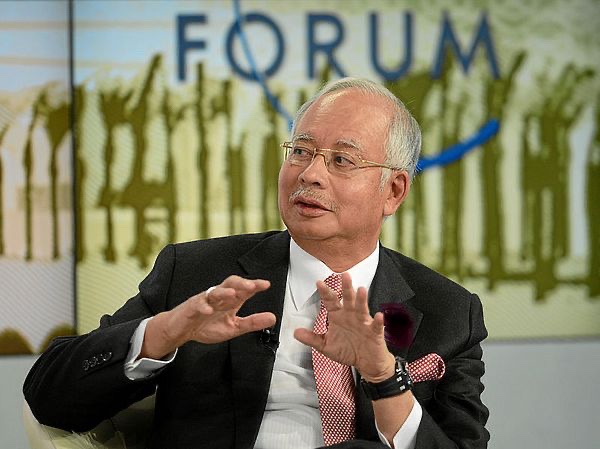
Political speechwriting is a craft where a scribe of modest talents attempts to marshal a leader’s flow of thoughts, ideas and arguments, weaving them into a narrative arc of words and sentences that ultimately convey purpose, meaning and emotions to a discerning audience.
Ben Rhoades, President Barack Obama’s closest speechwriter who served as his Special Assistant and Deputy National Security Adviser said this:
“If you are a speechwriter, you have to know what the person you’re writing for thinks. A lot of foreign policy advisers are thinking: how can I get my proposal into this guy’s speech? I was just thinking: what does he want to say?”
Ben was spot on. Dato Sri Najib Razak always knew what he wanted to say. My role was simply to figure out the best way he should say it.
I am proud to have once served Najib as his principal English speechwriter and Special Assistant to the Deputy Prime Minister from 2004 to 2006. We laboured over many speeches together, over the many years since I was first introduced to him in the late 1990s. This was one of them. In the present day context of the ongoing Russian war against the Ukraine, and the very real threat of military conflict over Taiwan, it is worth recalling Najib Razak’s reminder some 18 years ago.
Global Peace Forum
Putra World Trade Centre
Kuala Lumpur
17 December 2005[Remarks by YAB Dato Sri Najib Tun Razak, Deputy Prime Minister of Malaysia]
YABhg Tun Dr. Mahathir Mohamad
Honorary President, Perdana Leadership FoundationYABhg. Tun Dr Siti Hasmah Mohamad Ali
Excellencies
Distinguished Guests
Ladies and Gentlemen- Allow me to begin by thanking YABhg. Tun Dr Mahathir and the Perdana Leadership Foundation for inviting me to close this forum. I am not only extremely delighted to be here, but also deeply honoured that I am able to join such a distinguished gathering of individuals, to champion and give voice to humanity’s greatest and most elusive goal: the simple desire for peace.
Ladies and Gentlemen
- The 1899 Conference for Peace was the first major international gathering in history dedicated solely to peace as a desirable end in itself. As if to test our seriousness of intent, we have instead borne witness to one of the most violent periods in human history. The two World Wars, the Vietnam War, the Korean War, the Cambodian War and countless other conflicts where governments have waged war against their own people. Where tribe has fought against tribe. One race against another. People of one religion against believers of another. More than one hundred years on, we are gathered here in Kuala Lumpur to once again seek that peace that continues to elude the vast majority of humanity.
- In the aftermath of the Second World War, the United Nations, and in particular its Security Council, was entrusted with the prevention of war and the building of peace. We placed great hopes in multi-lateralism. We believed the overwhelming weight of world opinion would dissuade those intent on violence and aggression. We believed that no matter how inequitable the Security Council may have been in its construct, it could at least guarantee that the world’s most powerful nations would come together, and act as a check and balance against the possibility of war. Judging by the track record of the last 50 years, our only conclusion must be that the multilateral approach has been only partially successful. We can minimise conflict between small countries. We can check the aggressive actions of some larger nations. But we are powerless when it comes to countries that are either very powerful, or have powerful friends.
- As the 20th Century drew to a close, we found that the world was still a dangerous place. Palestine. Kashmir. Afghanistan. Congo. Rwanda. Somalia. Kuwait. Kosovo. Iraq. These nations are etched into our collective human consciousness: evidence of our failure to prevent the continuing waves of violence and human suffering. Despite the earnest efforts of the global community, the 20th Century ended no better than how it started: as a vast stain of red on the chronicle of human history.
- Given this bleak picture, how then shall we all go about translating the deep and basic desire for peaceful resolution of our differences? Is there a road map for peace? We must believe there is still hope. There are many practical ways in which peace loving peoples and governments around the world can act to promote a culture of peace. But it is my firm belief that we must also attack the very theoretical foundations of those who promote war as a means to achieve peace. We must protect the moral high ground for peace which they seek to claim for war.
- The world will never have lasting peace so long as men reserve for war, the finest human qualities. Peace, no less than war, requires idealism and self-sacrifice and a righteous and unwavering faith.
Ladies and Gentlemen
- As a starting point, we must de-legitimize the use of force by one country against another. Let me make it clear that I am not advocating that we give up the right to arms. Governments have the responsibility of building a robust defence capability. Every country has the right to self-defence, to protect life, liberty and property within its own borders. But in the absence of a world government or a willingness to surrender rights to a regional grouping, national sovereignty must remain sacrosanct and be the basis of interstate conduct. No country, no matter how high it perceives its moral standing, no matter how legitimate it feels its cause, no matter how certain it is of its military capabilities, can inflict war on another country as the means to protect its self interest, or that of the world.
- This forum has rightly called for an organised, global movement to encourage ordinary citizens to vote for peace and reject war. As government leaders across the world, we should sit up, listen carefully and take heed. In history, we know that the decision to go to war is taken by either a single powerful individual or a group of powerful individuals acting in concert. Throughout the ages, war has been waged by dynastic monarchies, ruthless dictators, military juntas, and even freely elected Prime Ministers and Presidents.
- However, in all these instances, there has been no vote, no referendum, no avenue to ask the most obvious constituent the most obvious question: citizens, do you want us to go to war? Ordinary people everywhere have not been given the right to decide whether to put at risk the lives of their finest young men and women, and to take the lives of other fine young men and women in far away places.
- It is far too naïve to expect dictators to consult with citizens on going to war, but can we not expect this of democracies? If people in the free world have the time to vote for their national idols according to the quality of their singing, if they can decide whether or not to impose the death penalty on their citizen criminals, why can they not be given the moral choice to decide whether to inflict certain death on innocent people abroad? Perhaps it is high time to allow intelligent voters, in democratic countries, to exercise their veto each time their government decides to go to war outside their own borders. We certainly have the technology and the ability to do this efficiently today. “Veto War” should become the rallying cry that humanity brings to every village, every community, every city, every government around the world.
Ladies and Gentlemen
- Our next priority must be to adopt a more holistic, balanced approach in our common pursuit of freedom. Freedom today has become too narrowly defined – unfortunately we have developed a truncated view of this noble quality. At the end of the Second World War, President Roosevelt spoke eloquently about the four essential freedoms that would secure peace. Let me quote him because his words ring true even more so today: “The first is freedom of speech and expression – everywhere in the world. The second is freedom of every person to worship God in his own way – everywhere in the world. The third is freedom from want – which means securing for every nation a healthy peacetime life for its inhabitants – everywhere in the world. The fourth is freedom from fear which means a worldwide reduction of armaments to such a point and in such a thorough fashion that no nation will be in a position to commit an act of physical aggression against any neighbour – anywhere in the world”.
- Roosevelt was right. Freedom is not just about democracy. It is also about religious tolerance and mutual respect. It is about eradicating poverty and ensuring prosperity. It is about collectively forsaking war and the “tools of war” as a legitimate instrument of foreign policy. Not just in the dark recesses of the Third World, but also among the enlightened First World.
- The Malaysian experience has taught us the wisdom that each country must be given the unequivocal right to pursue these freedoms in the order and at the speed that is appropriate to their individual history and particular circumstance. The desire for peace is far more resilient and universal than we think. History shows we need not use the force of war to give it full expression. Let me repeat this: We need not use the force of war to give freedom its full expression.
- There was a time when we understood this. The Marshal Plan for Europe after World War Two built the foundations of prosperity that would serve as a bulwark against tyranny and oppression. Allied Forces played a vital and welcome role in the reconstruction of Europe. The Peace Corps brought Americans outside of their comfort zones, to see how the other half of humanity lived – their contributions in education, in poverty reduction, in introducing new skills – resonate even today as a testament of the goodwill once shown by the good people of the United States of America. This was the soft power approach that the world welcomed, and one to which we must return.
- If it is true that democratic states generally do not make war on each other, we must ask why we seem to have less hesitation waging war on undemocratic ones. To those who point to the progress achieved in Iraq and Afghanistan, let me remind you also of the progress we have achieved in the former Soviet Union, in a reunified Germany, in the post-Velvet Revolution Czech Republic, in post-Apartheid South Africa, in recent Indonesia. It was Margaret Thatcher who drew our attention to the fact that Ronald Reagan won the Cold War without firing a shot. It was not war but the human spirit that acted as handmaiden to the birth of democracy in these countries.
- Malaysia’s own experience in UN peacekeeping and in humanitarian relief work by our armed forces and NGOs, have shown us that the values of freedom need not be furthered through the barrel of the gun. The humble shovel, the stethoscope, the water purifier, human compassion are no less powerful instruments for freedom and for peace.
Ladies and Gentlemen
- Our third endeavour is not directed at governments, but among ordinary peoples. To the proverbial man and woman on the street, we must convince ourselves to recognise that the most direct, real, undiscriminating threat to peace today – the scourge of terrorism – cannot be addressed by force alone. The purveyors of international terror run no governments, control no territory, command no armies. We are fighting an unseen enemy; a vengeful phantom menace that is shapeless and amorphous. Their foot soldiers are the dominated minds of ordinary people.
- But let us be warned. If we choose to bomb terror into submission, we will fail. If we choose to insult them into seeing the errors of their ways, we will fail. If we choose to respond to their hatred with more of our own, we will fail. If we choose to be blind to the legitimate grievances behind their illegitimate actions, we will most certainly fail. I am reminded of the saying, “if the only thing in your hand is a hammer, everything will look like a nail”.
- “True, lasting peace cannot be secured through the strength of arms alone. Among free peoples, the open exchange of ideas ultimately is our greatest security”. These were the words of an American President (Reagan). I would add that it is not only among free peoples that we have to exchange ideas. It is also among the un-free, the dispossessed, the poor, the illiterate, all around the world, with whom we must enter into honest dialogue, make concessions and even agree to disagree.
- We must seek to rebuild humanity’s respect for one another. There is a verse in the Holy Quran which enjoins men and women to know each other, for that is the purpose God created us of different creed and colour.
- History allows us to state with certainty that our future must be based on the culture of peace and dialogue between civilisations. Let us be persevering. Let us prepare our children to express dissent without violence, to be different but united by the values and universal principles of justice, of tolerance, of freedom, of equity, of solidarity. Let us not only learn foreign languages, but also appreciate the foreign-ness of the thinking behind the people who speak them.
- We have paid the heavy price of war and violence. How soon the culture of peace will replace the culture of war depends on us: On our convictions about the need for these changes. On our determination to achieve this goal. On our willingness to surrender the logic of force and embrace the force of reason. Only then can we hope for a culture of peace, dialogue and non-violence. Let us abolish war before it abolishes us. Let us all work together to make this happen. And let us not take another hundred years.
Thank you.
-
A Royal Pardon me?
No one could have imagined Tun Dr. Mahathir bin Mohamad would voluntarily resign as Prime Minister on 24 February 2020, stepping down as the most powerful person in the country after winning the 14th General Elections less than 2 years earlier. But he did.
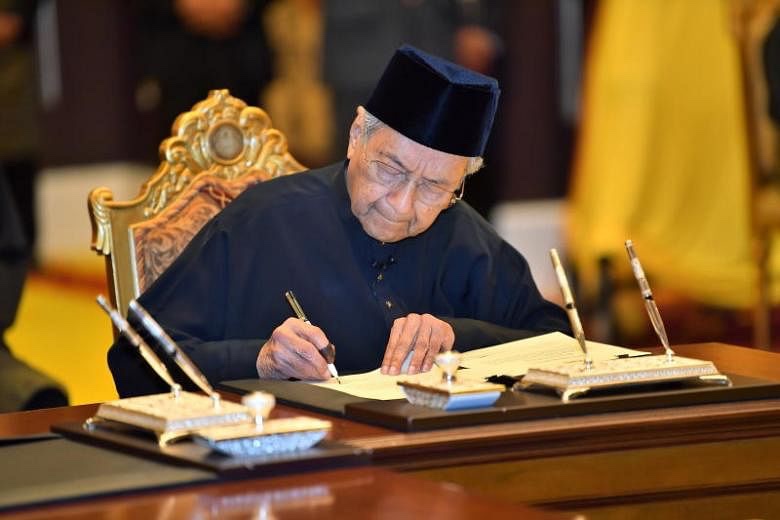
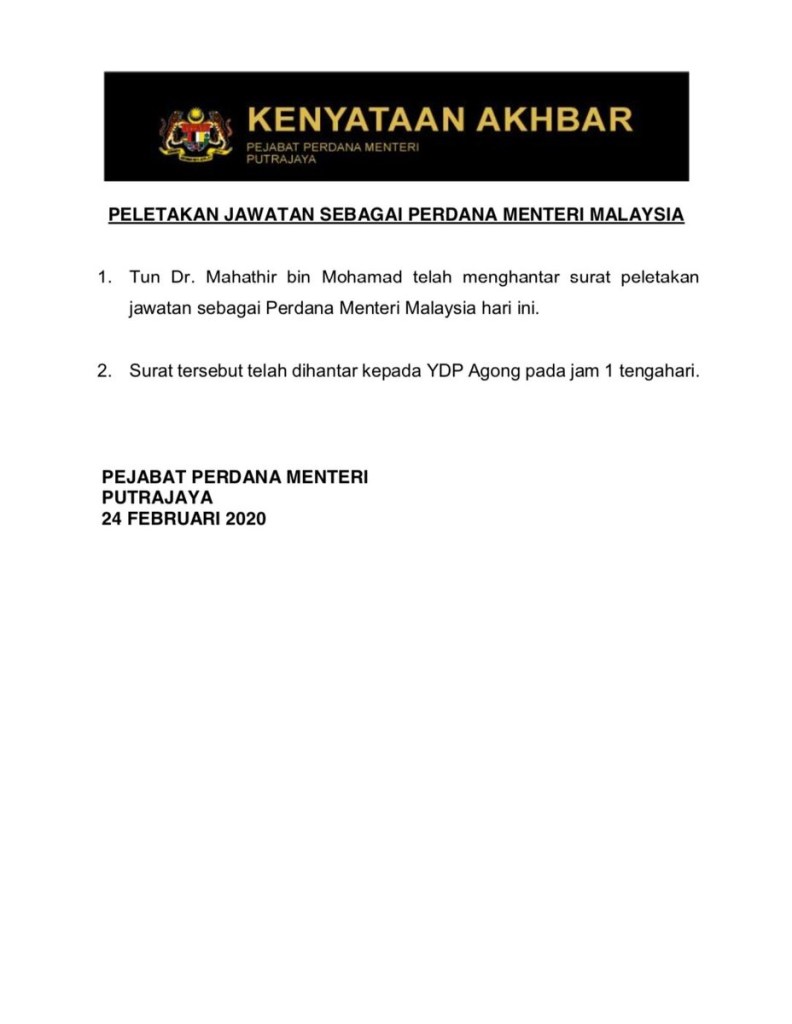
The rationalist’s explanation is that Dr Mahathir resigned on principle the moment he understood he no longer commanded the confidence of the majority of Members of Parliament, and therefore could not continue as Prime Minister. He did not wait for the YDP Agong to summon him to Istana Negara. He did briefly attempt to form a cross party unity government (the kind we now have under Kerajaan Malaysia MADANI), but he did not succeed because the Malay-based parties and a significant number of Malay Members of Parliament, declined to serve (or continue serving) in the same government as the DAP.
But for the humanist, what actually moved Dr Mahathir to surrender that which he cherished above all else – political leadership of the nation he built and shaped largely in his image – remains a mystery of the heart and not of the mind. When he placed his signature on his letter of resignation, some of us believe it would not have been possible absent a higher consciousness and divine intervention.
The matter of a royal pardon for Dato Sri Najib Razak can be viewed in a similar vein. For the rationalist it is all about cold facts and circumstances. For the humanist it is a matter of the heart and about sentiment. Specifically the hearts and sentiments of the Malays and the Malay Rulers. It is no longer about the judicial or legal process which properly – or some would argue improperly – concluded on 23 Aug 2022.
A royal pardon is the personal gift of a Malay Ruler. All manner of wrongdoers have been pardoned in the past: criminals, murderers and rapists among them. As Prime Minister, Dr Mahathir himself was part of the process of Dato Seri Anwar Ibrahim family’s appeal for a royal pardon from His Majesty SPB YDP Agong Sultan Muhammad X in 2018 – a pardon most vital for Dato Seri Anwar’s return to active political life without which he would not be Prime Minister today. A full and royal pardon whether for pauper or Prince is divine intervention conducted through mortal and ultimately flawed, men.

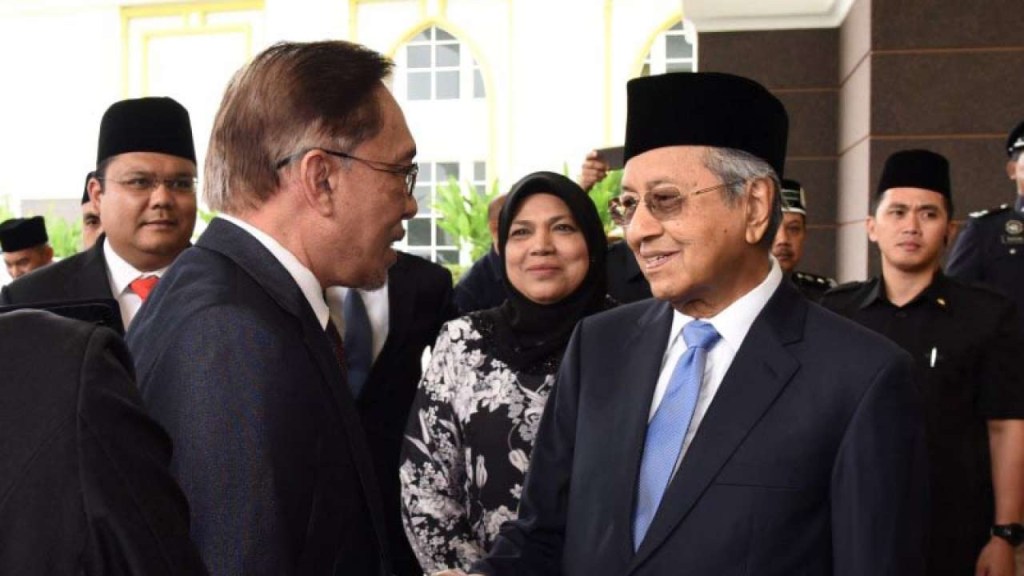
Underpinning any pardon is the notion of “ihsan”. Being merciful in the face of wrongdoing is a noble trait but it is rarely attained in the hearts of ordinary men let alone ruthless politicians. In the Surah Al Fatihah, Allah is exalted not once but twice as “The Entirely Merciful, the Especially Merciful”.
Surah Al Imran 134 speaks of givers and forgivers to be among “the doers of good”.
‘Who spend [in the cause of Allah] during ease and hardship and who restrain anger and who pardon the people – and Allah loves the doers of good;’
https://myislam.org/surah-imran/ayat-134/Wallahu’alam. Allah knows best.

Ps. Aside from Dato Seri Anwar Ibrahim, there have been two other high profile royal pardons of politicians in the past: Datuk Harun Idris the ex Mentri Besar of Selangor in 1982 (jailed for corruption) and Datuk Mokhtar Hashim a former Minister of Culture, Youth & Sports in 1991 (jailed for murder). What do Harun Idris, Mokhtar Hashim and Anwar Ibrahim have in common? All three were pardoned by different YDP Agongs decades apart but during the tenure of the same man serving as Prime Minister: Dr Mahathir Mohamad. Perhaps after all said and done, it is the Good Doctor himself who is imbibed with ihsan within him.
-
Against All Odds
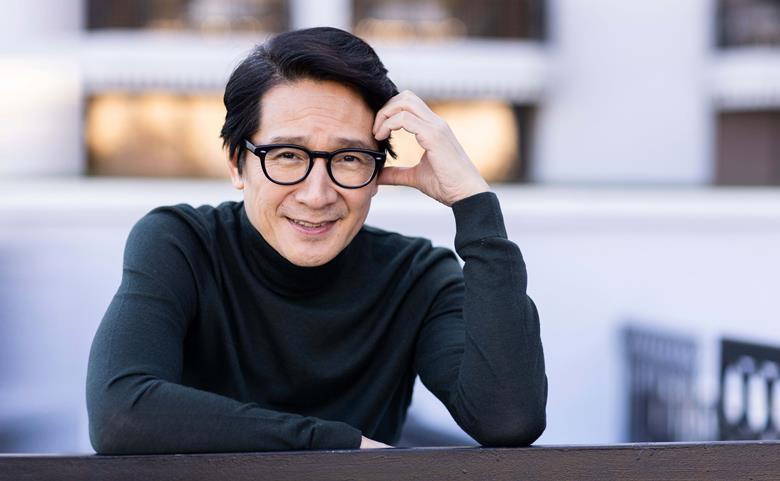
As we Asians/Southeast Asians/Malaysians bask vicariously in Michelle Yeoh’s glittering success and ultimate recognition by Hollywood’s Academy of Motion Picture Arts and Sciences, take a moment to discover the journey of her fellow Asian co-star and Oscar winner for Best Supporting Actor, Vietnamese American Ke Huy Quan. While Michelle’s journey to the Oscar red carpet may have been paved in gold, Ke’s was that of a wandering vagrant; a nameless, faceless, invisible immigrant eking out a living toiling the backstreets of Hollywood.
Ke’s family were originally Vietnamese boat people, fleeing refugees by boat off the war torn coast of then South Vietnam in the early 70s. His father and four year old him, sailed northeast towards Hong Kong, while his mother and siblings sailed southwest towards Malaysia; it was typical for families to deliberately divide to maximise their chances of eventually reaching and reuniting in America, which they did against all odds. Ke has defied all odds again more than four decades later.
My wife, a Southeast Asian (ASEAN) Games gold medalist in her youth (in silat olahraga, the Malay form of martial arts), once told me: on the great big stage when they hold up your hands in victory against your opponent, embrace humility even as you fix your teary eyes on the 🇲🇾 flag, because only you know how ridiculously impossible the journey actually was. Everyone else thinks it was destiny.
Passion, bravery and grit are what separates the dreamer from the day dreamer. In this Michelle and Ke are exactly the same.
-
A Malaysian Oscar
As Malaysians we instinctively lay claim to our nation’s daughters and sons who gain global success despite them having long left our shores. Malaysia was simply too small for their craft and talents. We celebrate and embrace with neither a hint of resentment nor embarrassment; eschewing “sowhatism”, “ifonlyism”
& “whatifism”.Privilege (family, exposure, education) gives you a valuable head start no matter what your nationality, creed or colour. But no amount of privilege can win you an Oscar. So heartiest congratulations and thank you Tan Sri Michelle Yeoh for being the first ever Asian in 95 years of the Oscars to be nominated and win Best Actress.
And yes my daughters are that little bit more inspired today to be all they can ever be.

-
Of childhood friends..
There’s a special joy in meeting a childhood friend.
Returning to Malaysia from Poland where my father was serving as a diplomat in 1984, I remember walking into Cikgu Abdullah Hj Mohd Salleh’s Bahasa Malaysia class a few days after the school year had already begun. 30 pairs of curious eyes stared back at me as I made my way to the back of class. There was an empty seat next to this boy, he gestured for me to sit. At the time I spoke no Malay, he knew a few words in English. I might as well have been an 👽 from another planet.
And so began my lifelong friendship with Abdul Razak Yacob (Ajak) for nearly 4 decades since that very first day at Sekolah Menengah Sains Muar, Johore. Over the 5 years at this science boarding school, I came to know his siblings, his parents. I spent short breaks at his humble home in Sagil at the foothills of Gunung Ledang. His father was a teacher, his mother a home maker. They treated me as one of their own. Afternoons we spent out in the verandah because the zinc roof made the noon day heat unbearable. Evenings we ate together on the linoleum covered floor and slept in the living room.
It was with Ajak that I discovered the joys of kampung life. We hiked and swam the nearby waterfalls. We rode kapcai through oil
palm estates and coffee plantations. We climbed coconut trees. He taught me how to open a coconut with a parang (and how to eat the flesh without a spoon). During Ramadhan we would visit suraus near and far. On one occasion after coming back from terawikh prayers his motorcycle ran over what felt like a speed bump – we turned around and the lights shone brightly on a huge python slithering across the pitch dark estate road! Kampung style weddings were the best, we got to help with communal duties gotong royong style for days on end. Girls would be in their Sunday best 😉. Hari Raya was another food filled delight, we would visit every neighbour in the village and selawat marhaban for nights on end. We took every opportunity to camp up on Gunung Ledang and one time, I cut myself pretty badly while trying to chop wood for fire with a parang – the deep scar on my left hand is a fond reminder of the many adventures we had together.Our friendship greatly influenced our attitudes towards studies too. Ajak taught me Malay and I taught him English, the quid pro quo was too obvious. He was always curious about my life in far away lands. For SRP, Ajak was the school’s top student scoring straight As and remarkably, I was among the top 10 with my rudimentary Malay three years before. Two years later for our SPM, I emerged top student and Ajak among the top 5. Funnily, after years of his tutelage, I scored A1 for BM and he A2; he scored C3
for English (Ajak, you were the better tutor 😂). We both won full scholarships to do A Levels in the UK under the Government’s British Top Universities (BTU) programme. I truly believe if it wasn’t for our friendship, neither Ajak nor I would have made it to England to further our studies. Allah intended for our paths to cross.Thirty five years on, Ajak’s destiny is that he and his family have made England their home for over two decades now. A boy who lived his whole childhood in and around Sagil and Muar. Having lived overseas my whole life until the age of 13, followed by university and later, work in London, I’m now happily settled in KL. Like a lazy Susan, the tables are now turned.
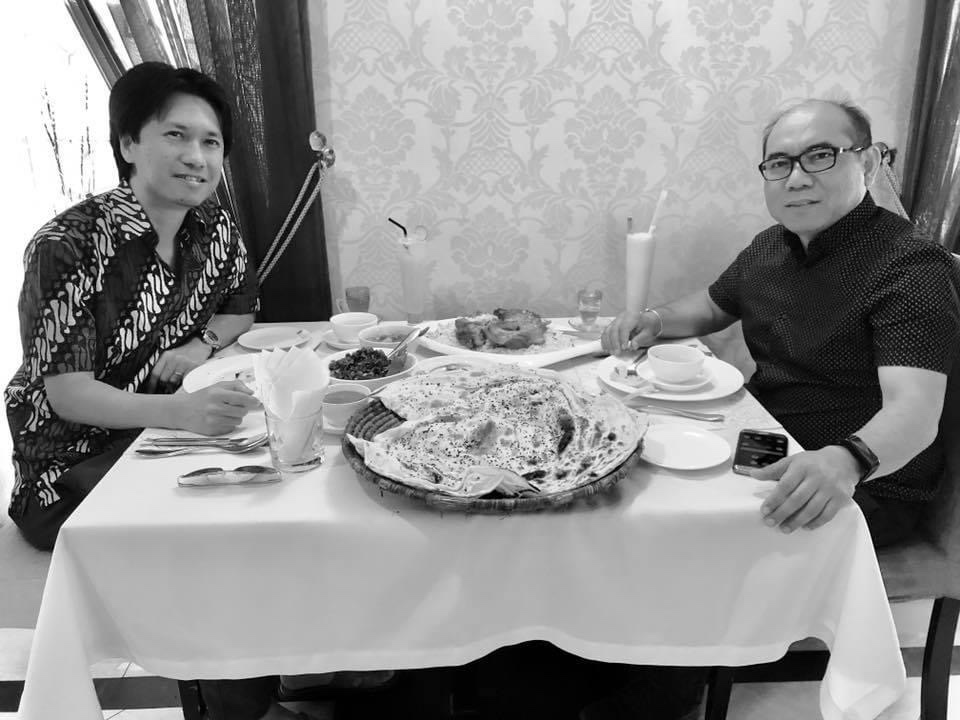
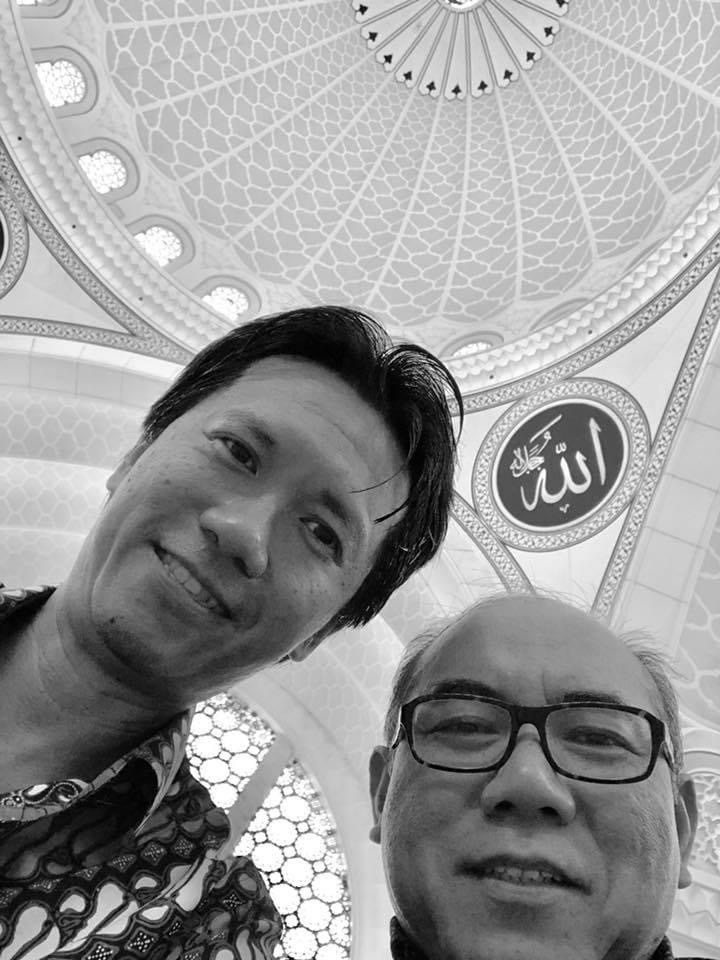
So when Ajak and I met again recently on one of his rare visits home, we simply picked up where we left off, swapping stories about kids, work and life. I pray that you will continue to be blessed with peace and happiness old friend.
-
Subscribe
Subscribed
Have a WordPress.com account? Log in now.

