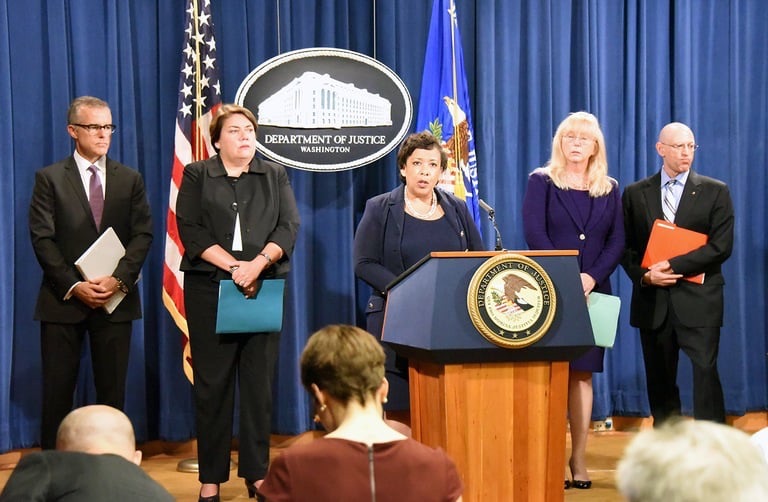
Washington politics, the 1MDB scandal, and the man who carried its weight
Every political system requires fall guys. They are the figures who absorb the punishment so that institutions may endure and leaders may survive. In Washington the fall guy is a familiar instrument of power, providing the spectacle of accountability without the cost of dismantling the system itself. The 1MDB affair, often narrated as a Malaysian scandal, was equally a Washington story. It intersected with three American presidencies, each consumed by its own partisan battles, and in each phase someone had to take the fall. The cast changed over time, ranging from financiers and lobbyists to celebrities and even an entire nation, but the narrative logic was constant. At the centre of it all stands Najib Razak, the one man who unlike the intermediaries and enablers scattered across the globe remains imprisoned, contested, and indelibly branded. He is the ultimate fall guy, the enduring symbol of a scandal far larger than himself.
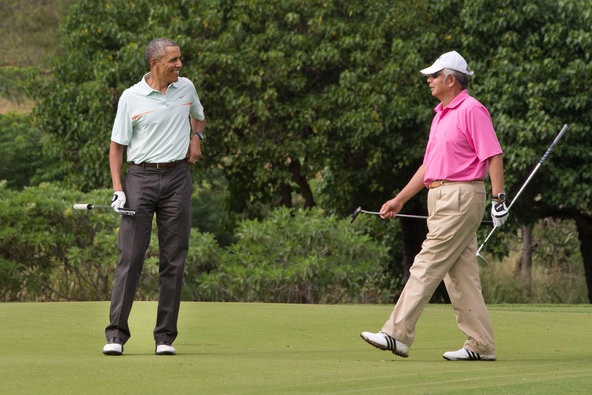
The scandal first arrived on the world stage in Washington in July 2016 when then Attorney General Loretta Lynch and senior Justice Department officials announced what they described as the largest kleptocracy case in history. The phrase was deliberate. It was theatre as much as law. For the Obama administration, besieged by questions of credibility after the Panama Papers and eager to claim leadership in the fight against global corruption, 1MDB was the perfect case. It had all the optics: billions siphoned from a sovereign fund, yachts and Beverly Hills mansions, Hollywood films and Leonardo DiCaprio, diamonds and Picassos. It was corruption already written for a movie script. And critically, Malaysia was a safe target. Large enough to dramatise, small enough to be expendable. Unlike Russia or China, it would not retaliate. Unlike Gulf sovereign funds, it was not a vital American ally. So Malaysia, and Najib Razak as its prime minister, became the showcase villains.
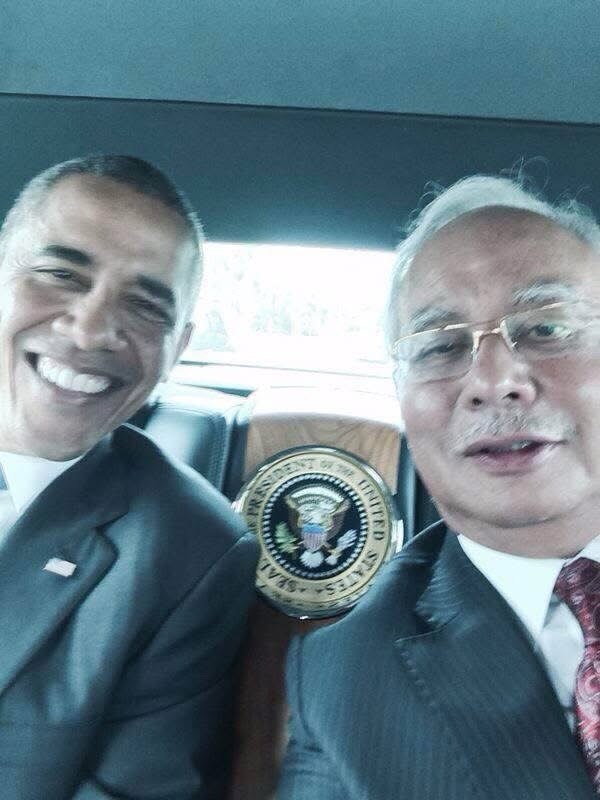
Meanwhile, the global enablers of 1MDB’s flows, the banks that moved the money, the Hollywood auction houses and galleries that sold the art, and the Gulf intermediaries who cut deals with the proceeds, all escaped the full glare. The Department of Justice got its global theatre, Malaysia bore the shame, and the world learned the name 1MDB. From the very beginning the narrative had already chosen its fall guy.
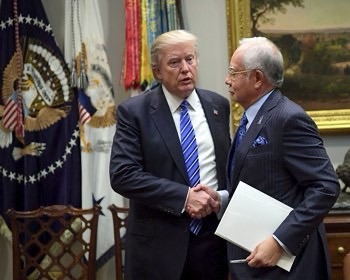
Under Trump the story did not fade. It re-entered Washington through its most porous channel, which was money. By 2017 Jho Low was desperate. His yacht had been seized, his assets frozen, and indictments loomed. So he did what the wealthy have always done in Washington, he hired lobbyists. The celebrity conduit was Pras Michel, the Fugees rapper. The political operator was Elliott Broidy, a Republican fundraiser and deputy finance chair of the RNC. The goals were audacious. Persuade the Department of Justice to abandon the 1MDB prosecutions and engineer the extradition of Chinese dissident Guo Wengui as a favour to Beijing. In return Broidy was promised tens of millions.
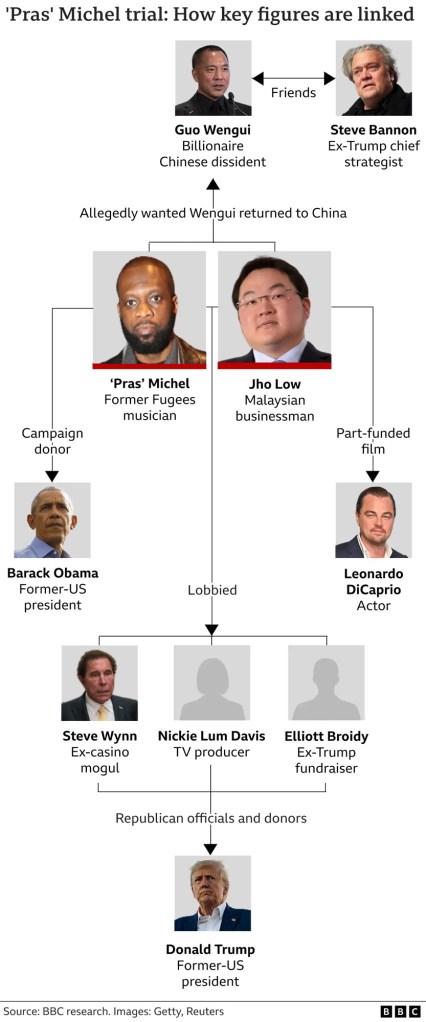
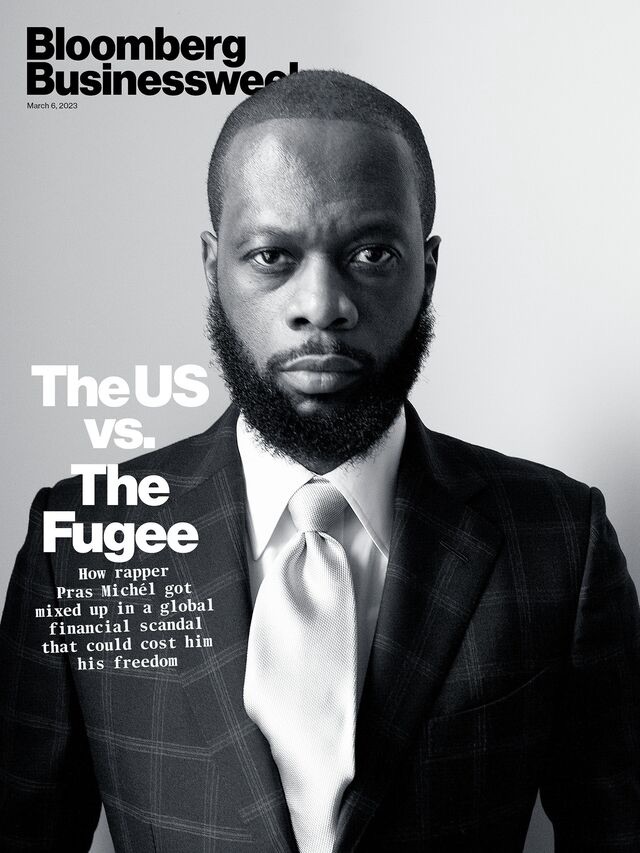
But the timing was fatal. Washington was already aflame with the Mueller investigation and accusations of Russian influence. The Justice Department, accused of bias from all sides, needed credibility. And credibility meant proving that foreign lobbying would not be tolerated even when Republicans were involved. So Broidy became expendable. Indicted in 2020, pleading guilty to conspiring to violate the Foreign Agents Registration Act, he was abandoned by his party and pardoned only on Trump’s last day. Pras Michel followed the same arc. Indicted in 2019 and convicted in 2023, he became the celebrity face of foreign influence gone wrong. Both were fall guys, useful to prosecutors, satisfying to the press, and ultimately forgettable.
Meanwhile, the real architecture of the scandal, the banks that moved the money, the industries that absorbed it, the sovereign allies who profited from it, remained untouched.
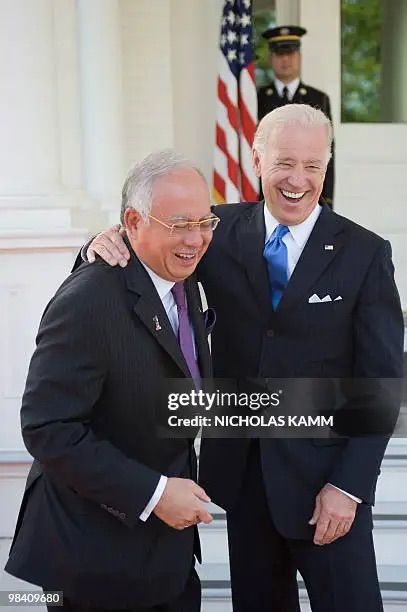
The transition from Trump to Biden changed the players but not the script. Biden’s Justice Department continued to prosecute intermediaries. Pras Michel’s trial reached its conclusion, Tom Barrack was indicted for lobbying on behalf of the UAE, and others were caught in the long tail of FARA enforcement. These cases served the same function as before. They were high-profile, safe, and foreign enough to dramatise institutional vigilance without destabilising the core system. They showed continuity, not reform. The deeper pipelines of money and influence, Wall Street, K Street, Gulf capitals, stayed intact. Fall guys remained indispensable to Washington’s narrative of accountability.
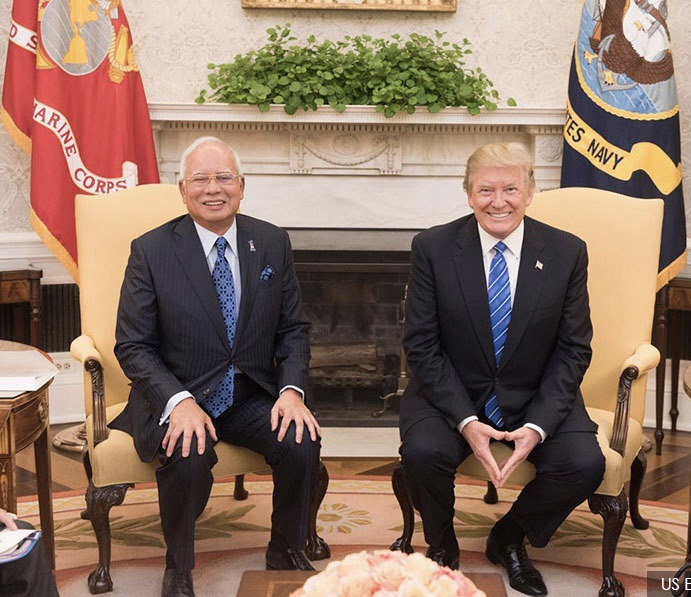
Across three presidencies the roll call of fall guys grew. Broidy, Michel, Barrack, and others passed across the stage. But none bore the weight that Najib Razak has borne. For the Department of Justice he was the name that validated the largest kleptocracy case in history. For Malaysia’s opposition he was the villain whose downfall enabled their improbable electoral victory in 2018. For global media he was the shorthand that made the story travel, a prime minister entangled in a billion-dollar heist. And unlike Jho Low who vanished into exile, Najib stayed. He faced trial, conviction, and imprisonment. He received a partial pardon, yet remains in prison. He continues to be contested in Malaysian politics, his fate still debated, his name permanently linked to the scandal. Najib became and remains the ultimate fall guy, not only for Malaysia’s transformation but for Washington’s partisan theatre and for a global financial system too fragile to put itself on trial.
The story of 1MDB is therefore not just about money, it is about narrative. Who controls it, who amplifies it, and who is drowned out by it. Under Obama Malaysia was the convenient fall guy for global anti-corruption theatre. Under Trump intermediaries like Broidy and Michel were sacrificed to sustain the credibility of the Department of Justice amid partisan fire. Under Biden the pattern endured, prosecutions continued, and the system could still claim vigilance. But through it all Najib Razak became everyone’s fall guy, the man whose downfall served Washington’s credibility, Malaysia’s political change, and the world’s appetite for a morality tale. That does not erase his own role in 1MDB, nor does it absolve him of having gained from what unfolded under his watch. What it does show is how a scandal that implicated financiers, bankers, lawyers, celebrities and governments across continents ultimately resolved itself into the fate of a single man.
Narratives matter more than facts. They decide who is punished, who is protected, and who is remembered. And in the case of 1MDB Najib Razak was not the architect, but he became the beneficiary most exposed, and in the end, the narrative that endured.
 Musings of the (occasional) thinker; planner; do-er